
Jericho (19/252)
a Vermont 251 post

If you’re new here: the Vermont 251 club is a decades-long initiative to visit (not just drive through) all the named locations (towns, cities, villages, etc.) in Vermont. There are now 252, but the club has elected not to update its name.
I’ve been doing this since last summer. I stopped over the winter, as I am not a terribly confident winter driver. But now I’m back! The main post is here, with the list, and as each one is visited, the name becomes a live link to that post.
Jericho, Vermont has a lot of the usual New England dichotomy.
Median household income clocks in around $115,000, the median age is 47.4, and depending on which data source you trust, recent home sales have ranged from $381K to over a million dollars depending on the month and what’s actually moving.
The town has about 5,100 people, and the kids who live there are mostly either of the one-nanny-per-kid social class or the shares-a-bedroom-in-a-poorly-heated-trailer social class. I don’t know for sure, but I would bet the number of kids in the social class in between is in double, not triple, digits.
The median construction year of housing stock is 1981, which tells you something about who got in before the wall came down on affordability and who didn’t.
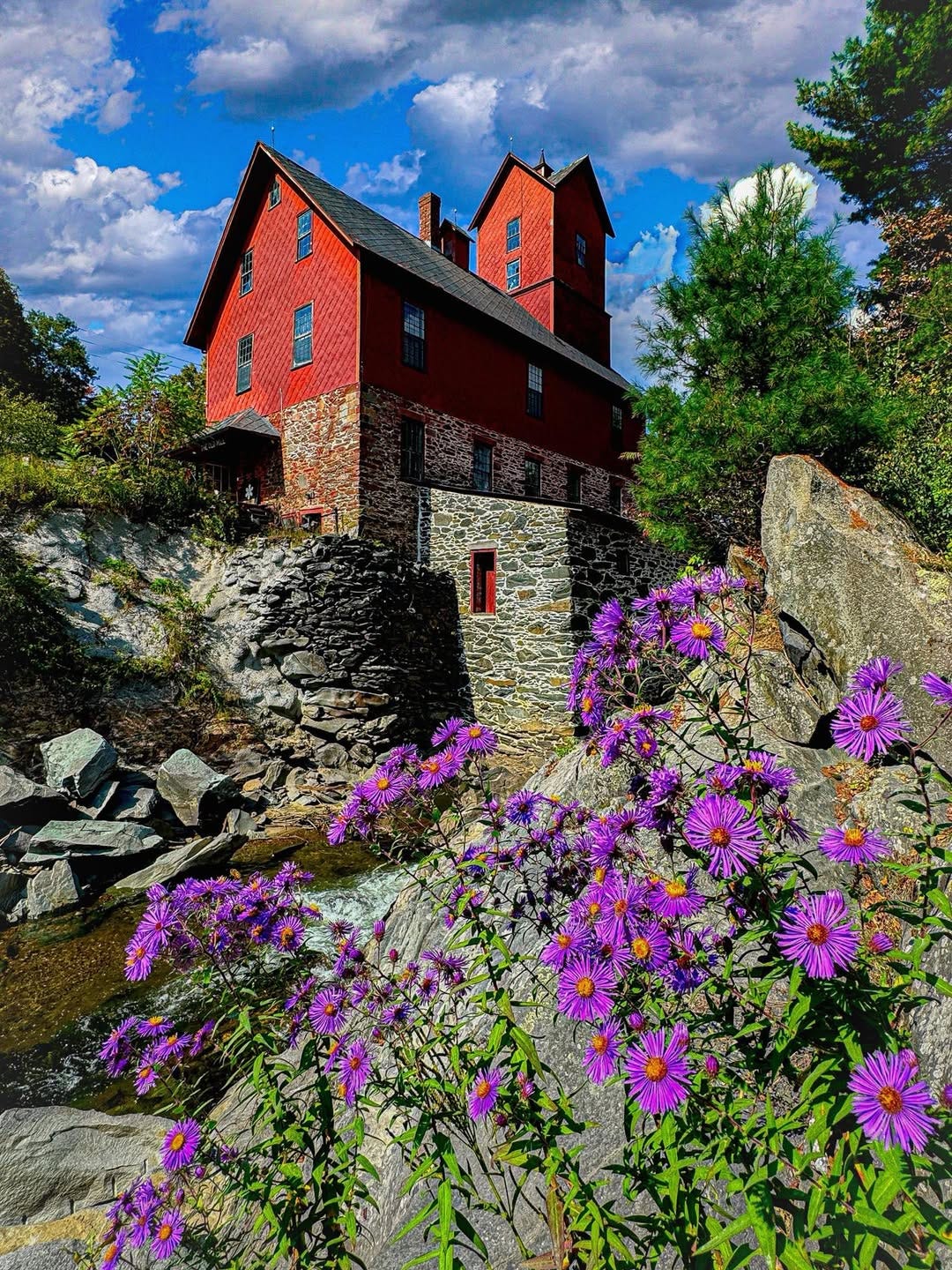
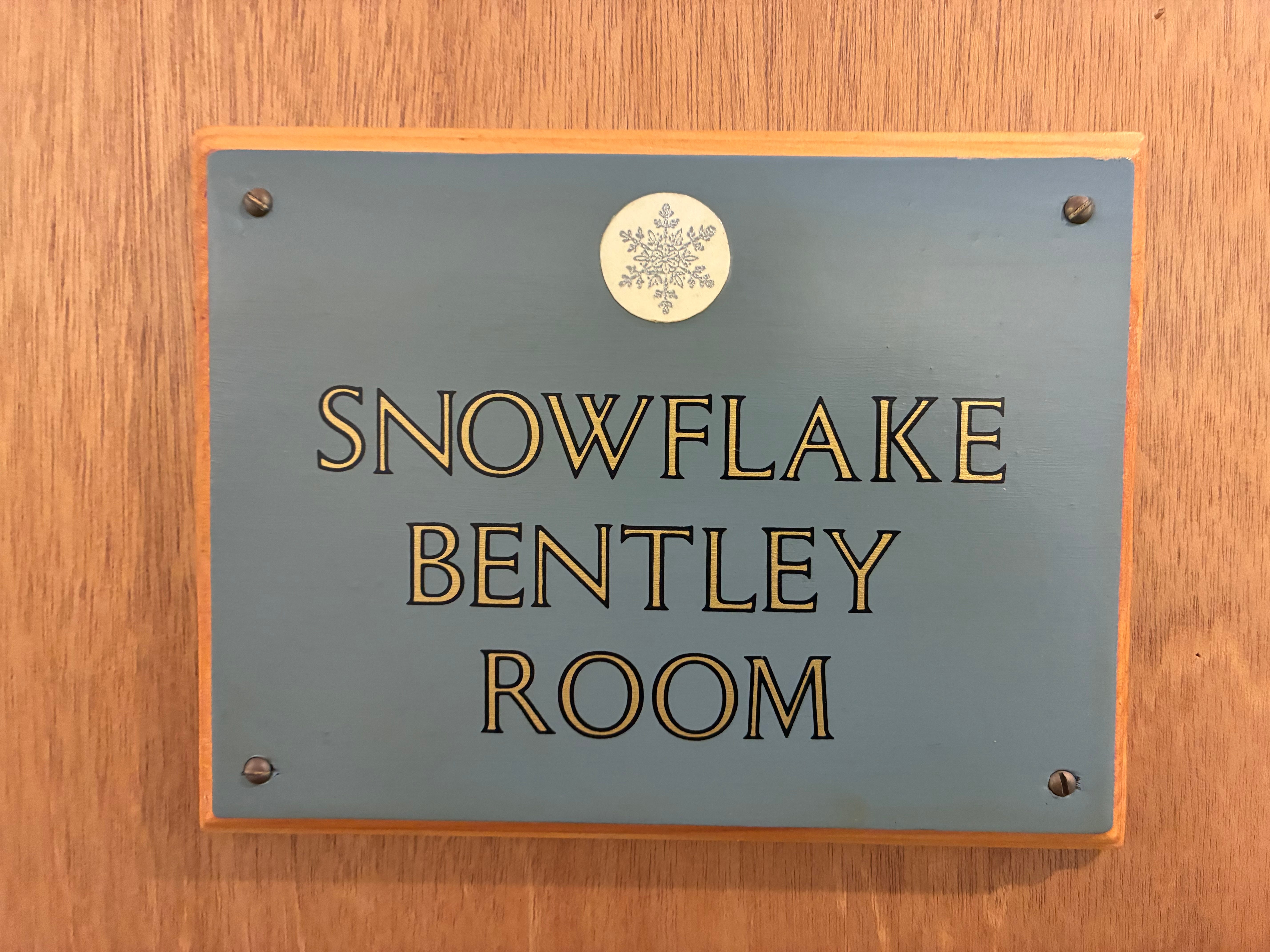
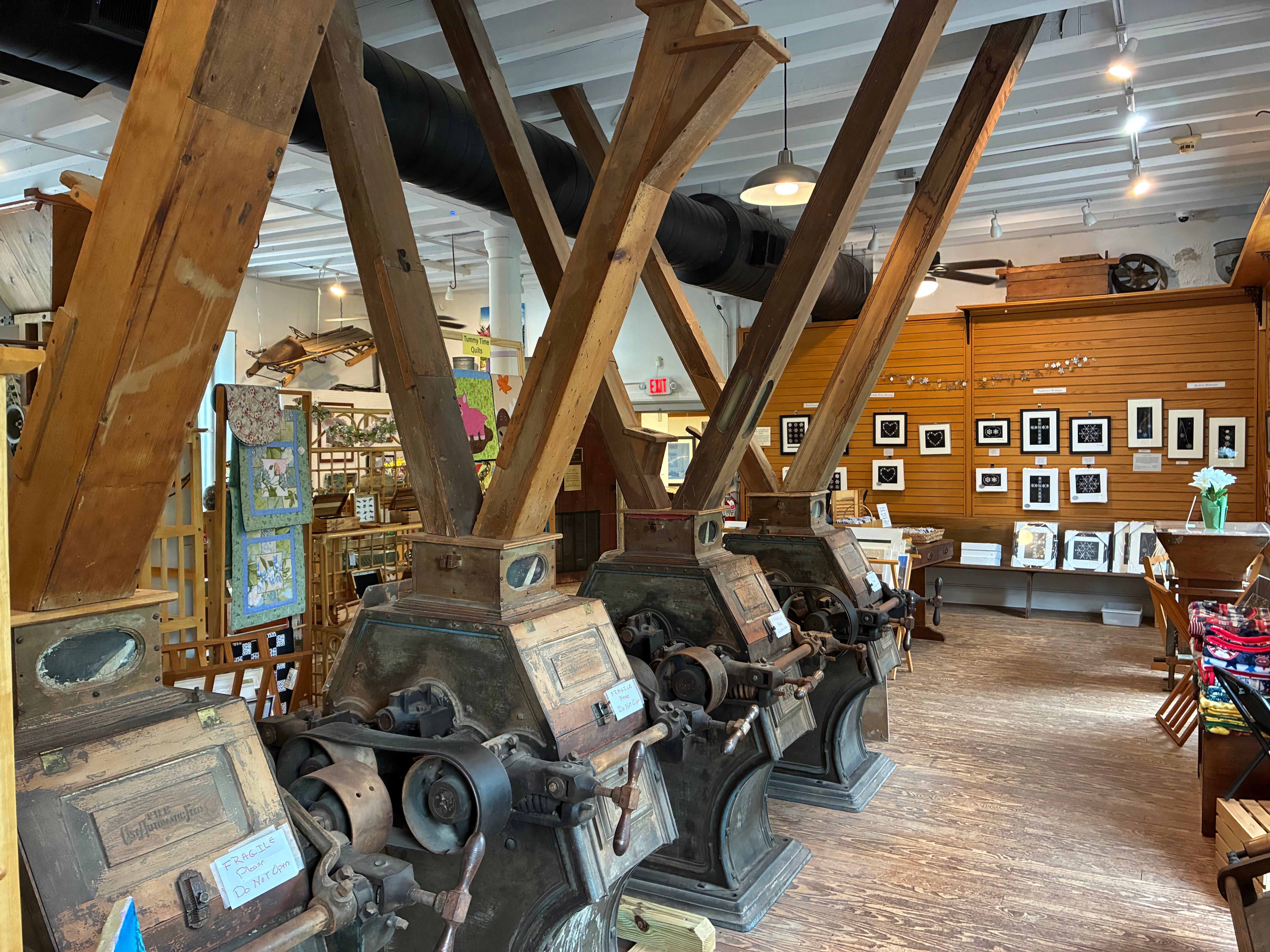
I visited on Saturday afternoon. I’d been before, but not on an official Vermont 251 visit. My destination was the Snowflake Bentley Museum, housed in the Old Red Mill, which has a really fascinating display of old-fashioned photography — the actual bellows camera, the microscope, the slides, the technical notebooks, all of it preserved by volunteers who clearly love what they’re doing.
It’s a place that Josh Slocum will absolutely love, when I eventually drag him there. (He was home recovering from a really difficult last few days.)
Josh knows quite a lot about old-fashioned ways of doing everything, particularly photography and film, and the Snowflake Bentley museum is the source of many fascinating examples of such — the kind of place where someone like Josh stands in front of a single display case for fifteen minutes while the rest of the room moves on.
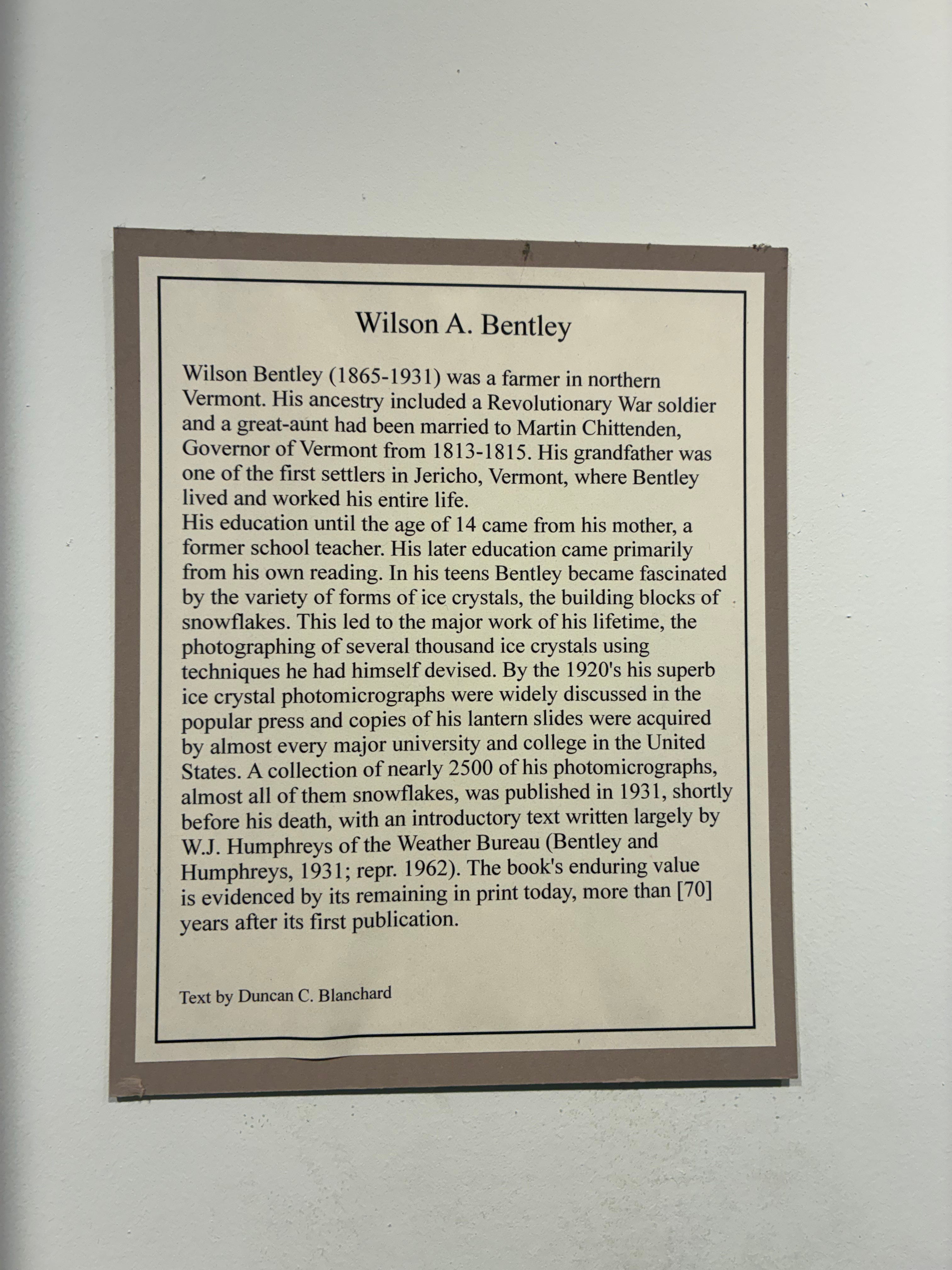
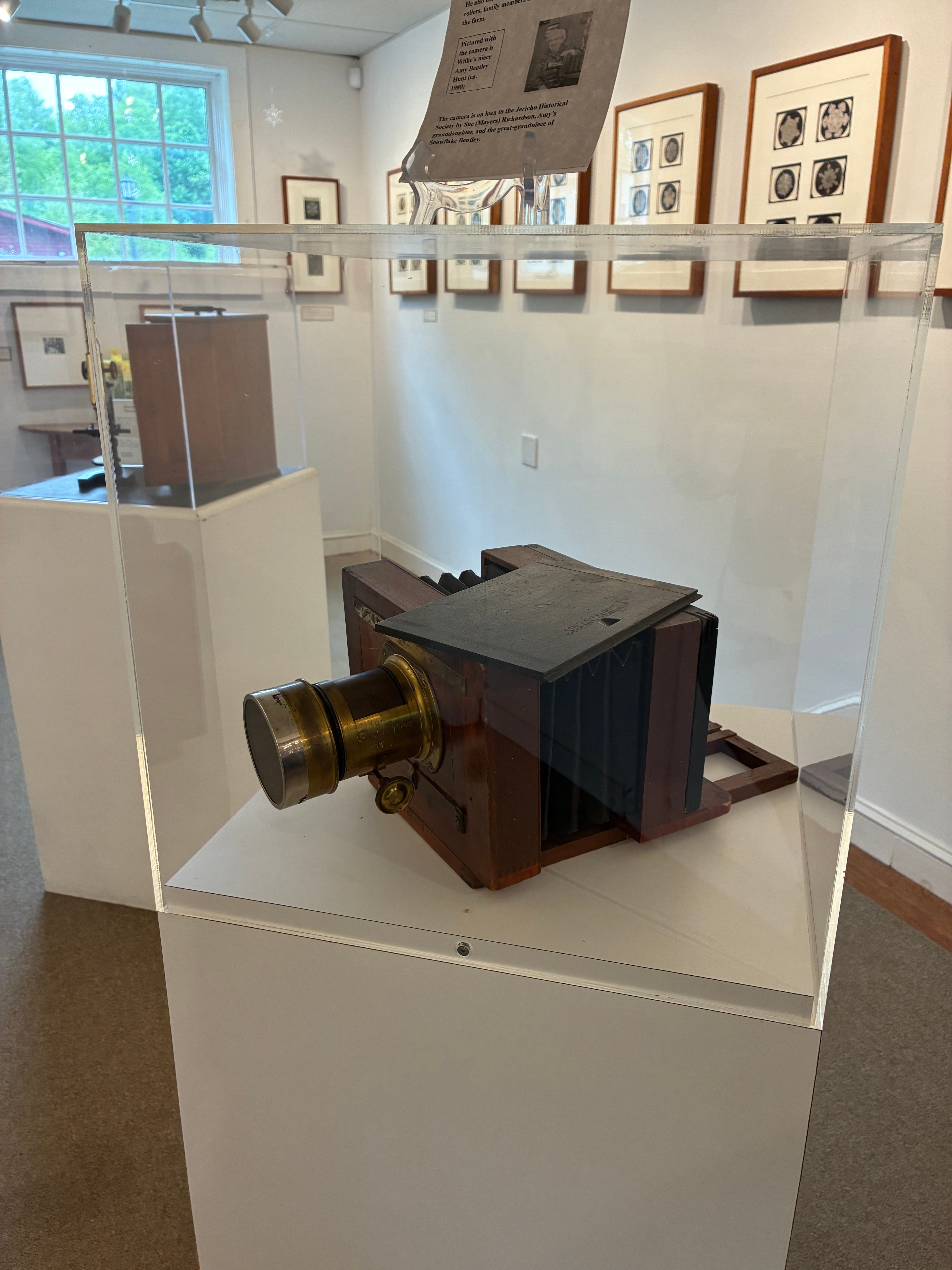
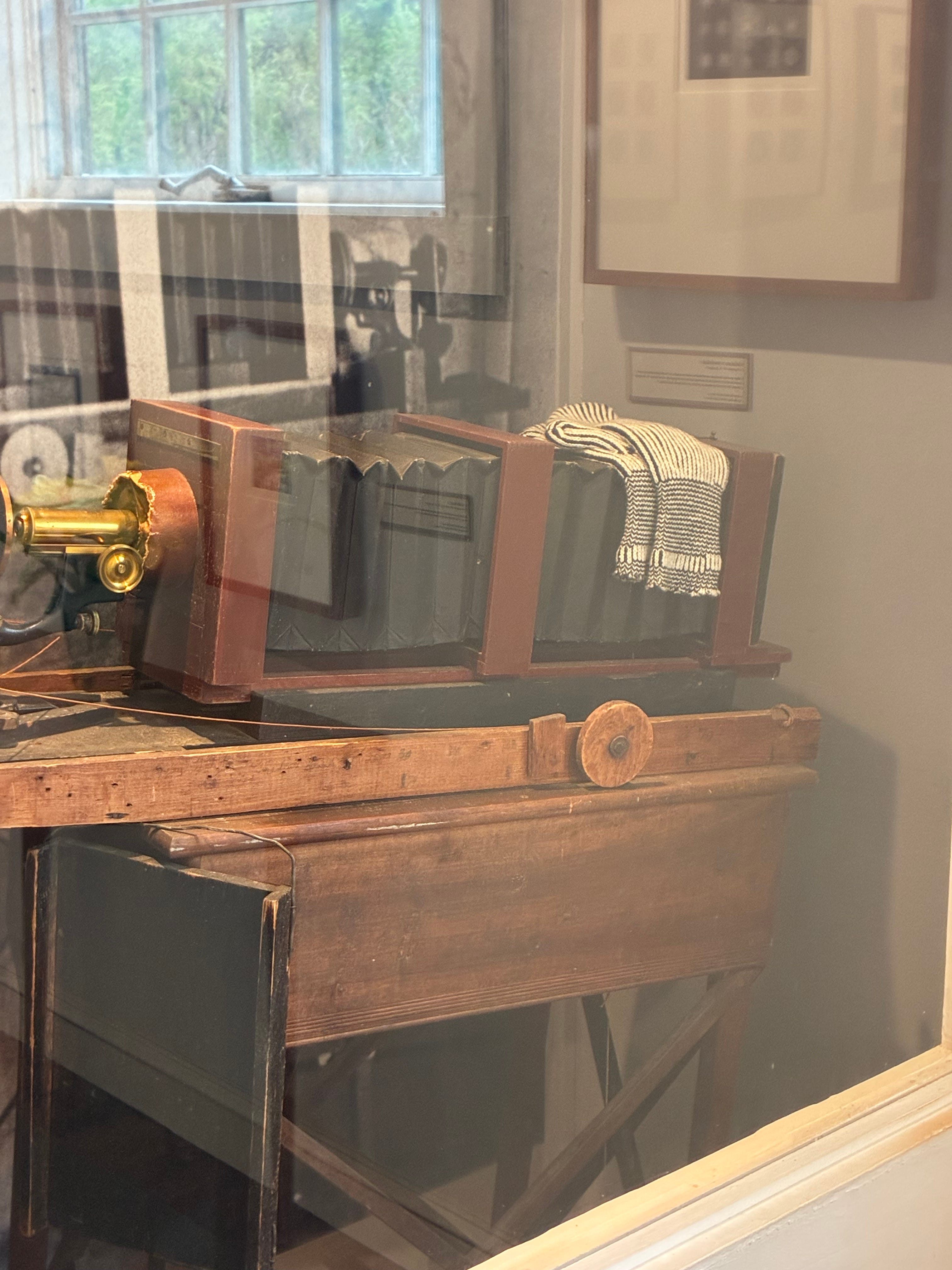
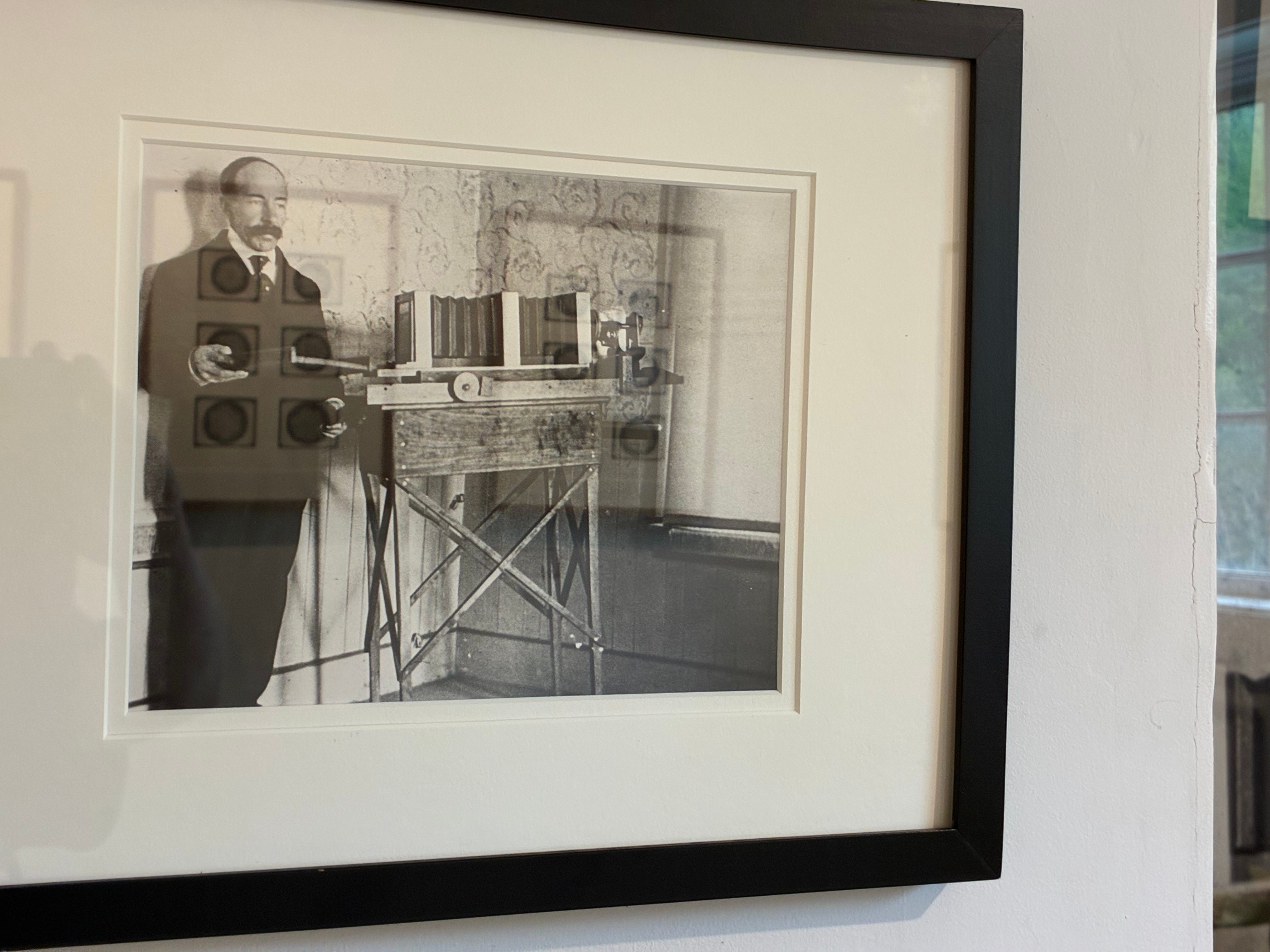
The Man Himself
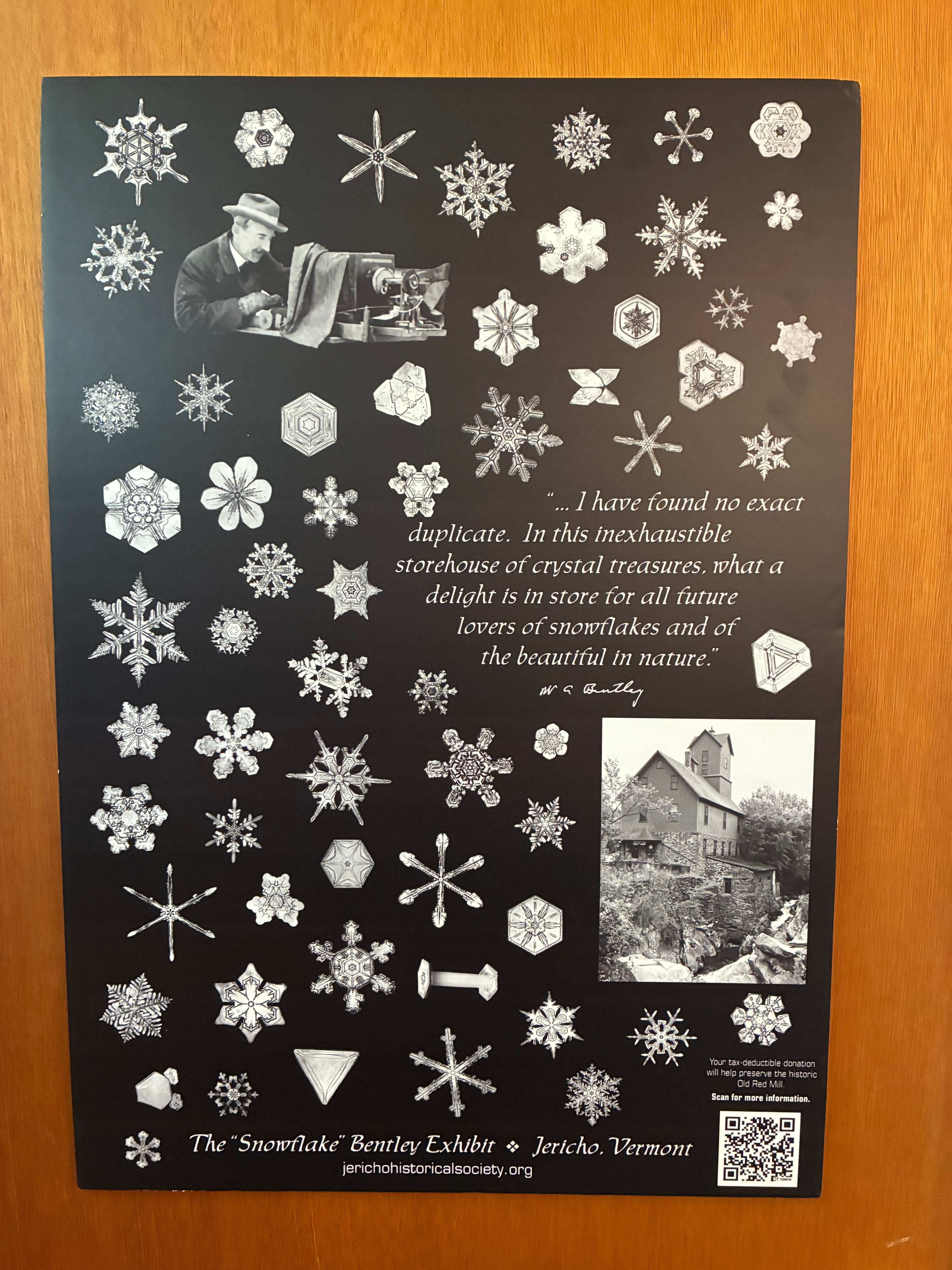
Wilson Alwyn Bentley (1865–1931) was a self-taught farmer from Jericho who spent forty years photographing snowflakes. He took his first successful photomicrograph in 1885, at age twenty, using a bellows camera rigged to a microscope.
He’d catch flakes on a piece of black velvet, transfer individual crystals to a slide with a feather or a splinter of wood, and photograph them through the microscope before they melted or sublimated. Over his lifetime he produced more than 5,000 images. He worked alone, on the family farm, in a part of Vermont that gets about 120 inches of snow a year.
He was also the source of the popular claim that no two snowflakes are alike — not as folklore, but as a working theory built on the staggering structural variety he documented year after year.
The formal scientific establishment mostly ignored him during his lifetime. He had no university affiliation. He was a farmer with a camera.
He donated 500 of his prints to the Smithsonian in 1903, gave his original glass-plate negatives to the Buffalo Museum of Science, and co-authored Snow Crystals with W.J. Humphreys in 1931 — a book that came out just weeks before he died of pneumonia, contracted after walking home through a blizzard.
The long-term impact is the part that gets me. Kenneth Libbrecht, who runs the snow crystal lab at Caltech, has pointed out that Bentley’s photographic technique is essentially the same one researchers still use today, and that Bentley did the work so well that almost nobody bothered to try for nearly a hundred years.
That is a remarkable thing to be true about a self-taught farmer. He didn’t just document his subject — he closed the field.
For a century.

The Niece
Bentley had no children, but he had a favorite niece — number six of his brother’s eight children, who worked with him and helped him. She died in 1988, but the family legacy lives on.
The docent on duty when I stopped by Saturday afternoon was her granddaughter, now volunteering in retirement to continue her family legacy.
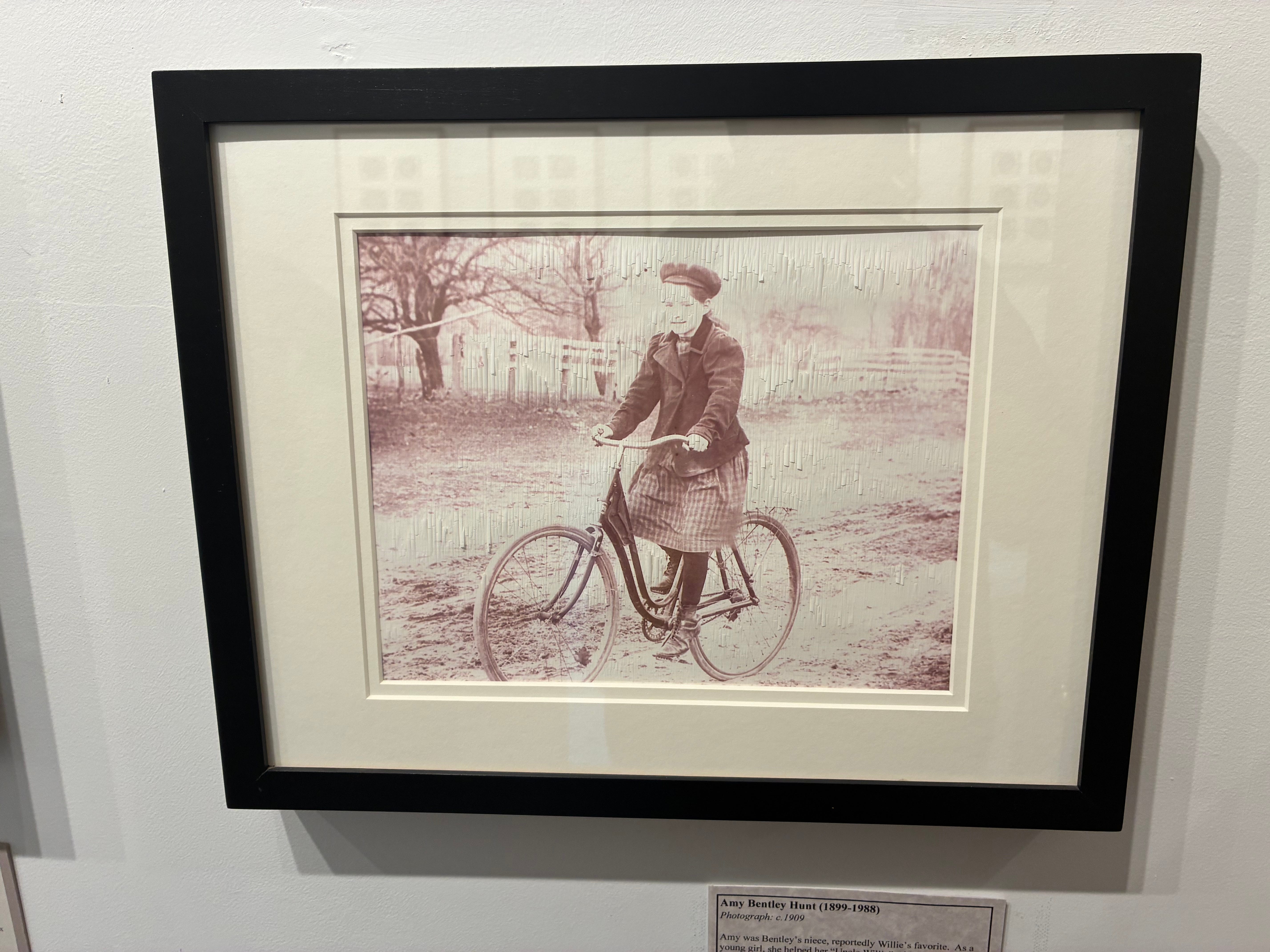
There is something quietly Vermont about that. The man’s work is in the Smithsonian, but the woman explaining it to visitors on a Saturday afternoon is his great-great-niece, doing it on a volunteer shift.
I’m not going to try to write about the gift shop, which is full of local artists’ work and prints of Bentley’s snowflakes, because I’d just be saying “the pretty things are pretty,” and we all know what that sounds like. Go see it yourself.
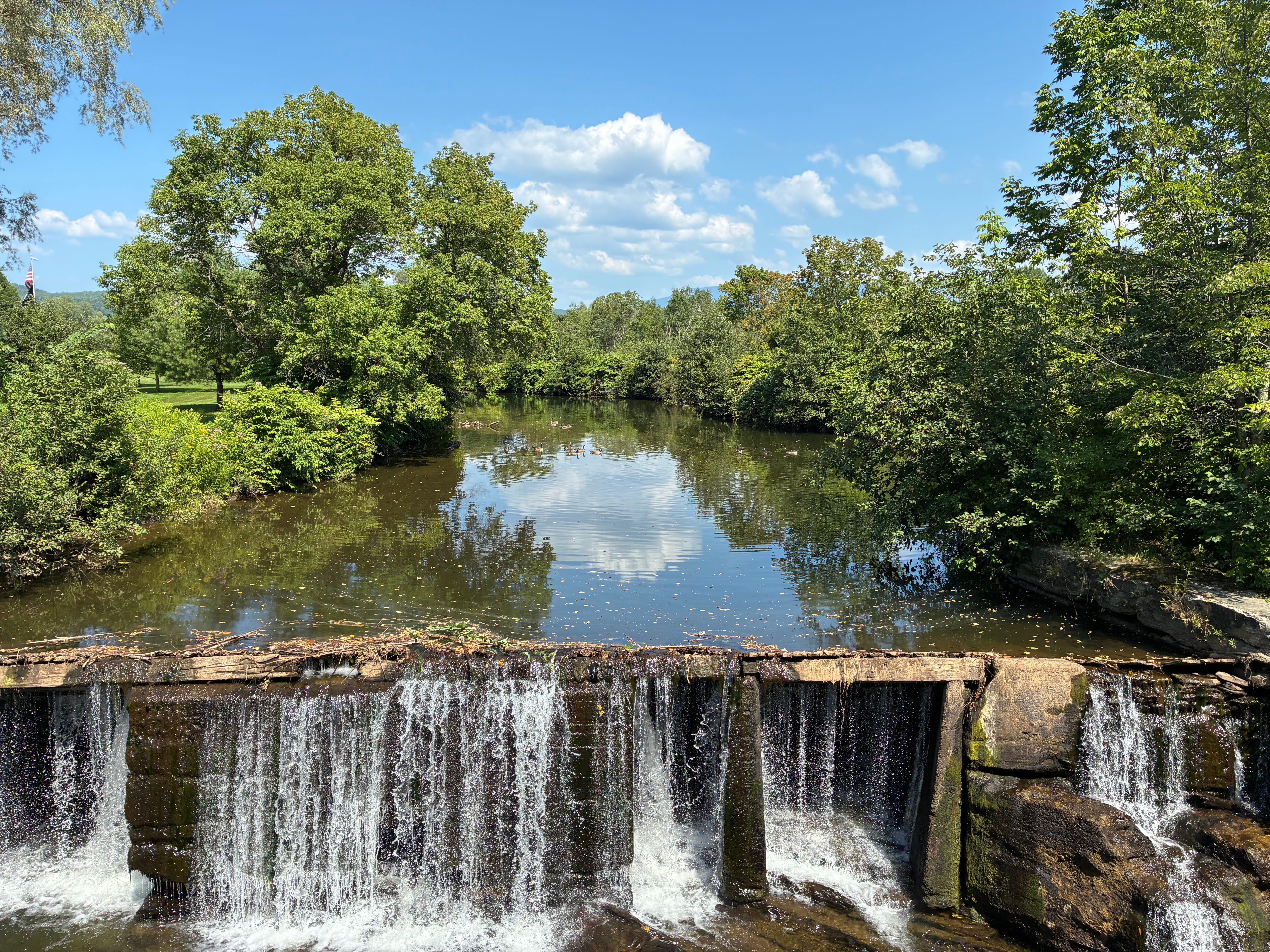
Also: Jericho has many gorgeous walking and biking spots, including several residential streets with bridges and waterfalls that make for stunning scenery, in case you need a reason beyond the museum.
The 192-Page Detour
Driving home, I was thinking about the 2024 DNC autopsy, which dropped recently and is 192 pages long. I’m doing a full data scientist analysis of it for paid subscribers — the kind of analysis you actually pay for, with the methodology shown and the numbers checked — and the working frame is rigor and snark in equal measure.
That’s the deal: you get the data scientist doing the data scientist thing, and you get the human being who read the document reacting honestly to what she read.
Here is my problem. I love writing political snark. I will admit that up front. It is one of the genuine pleasures of this side hustle. (See my reviews of books by Kamala Harris, Karine Jean-Pierre, Gavin Newsom, Michelle Obama, and Jake Tapper.) But I also take the rigor side seriously, and I have been trying, in good faith, to keep the two in balance for the paid piece.
The document is making that very difficult, because it has done so much of the snark for me that the only honest thing to do is report what it says.
The executive summary is blank. (”This section was not provided by author.”) The conclusion is blank. The appendices are blank. The notes for the reader are blank. The sources are blank. The DNC commissioned the report from a consultant named Paul Rivera, then annotated his own document with in-line objections like “Claim contradicts public reporting” and “Analysis not supported by the data” and “Methodology appears internally inconsistent” — by the DNC, on the document the DNC paid for.
Then they slapped a disclaimer on every page noting that the DNC was not provided with the underlying sourcing and cannot independently verify the claims.
Then the chair publicly distanced himself from the thing on release day and apologized for “creating an even bigger distraction.”
It is a 192-page document about how the Democratic Party lost, which the Democratic Party officially does not stand behind, written by a consultant the DNC is on the record correcting in the margins, released after months of internal pressure by a chair who would clearly rather it had stayed in a drawer.
I cannot rigor my way out of that.
There is no methodological sophistication I can deploy that makes “the executive summary is the words This section was not provided by author” land as anything other than what it is. If I tried to write this piece with rigor alone, holding the snark back out of some misplaced sense of professional restraint, I would be lying to my paid subscribers about what the document actually is.
The mockery is not editorializing. It is reporting.
So the piece is going to be both. The rigor part — voter registration trends, the actual numbers on state party funding, what the report claims about turnout vs. what the data show, the parts where Rivera’s claims and the DNC’s annotations contradict each other and which side the public record supports — that’s the work, and it’s the part subscribers are paying for. The snark part is what happens when you take that work seriously and notice, repeatedly, that the document under analysis does not.
And here is the stretch — I admit it’s a stretch — but it was sitting in my head the whole drive home.
Bentley spent forty years on one subject, alone, on a farm, with no institutional support, no team, and no budget, and produced work so rigorous that the field couldn’t improve on it for a century. The DNC spent over a billion dollars, employed thousands of staffers, hired consultants, contracted state parties, ran polling operations, and produced a postmortem with no executive summary, no conclusion, no sources, and a footer that essentially reads the management is not responsible for the contents of this document.
One man with a microscope and a bellows camera, working in a farmhouse, produced something durable. An institution with effectively unlimited resources produced 192 pages of “this section was not provided by author.”
You could frame this as a story about the difference between people who care about the work and people who care about the optics around the work.
You could frame it as the difference between a man who knew his subject and an institution that has lost track of its own.
You could frame it as the same dichotomy the town itself runs on — the people who built something here, and the people who arrived afterward and live in the result without ever quite understanding it.
Mostly what I keep coming back to is this. Bentley’s great-great-niece is in Jericho on Saturday afternoons, in a rickety old mill building, telling visitors about her ancestor for free.
Nobody had to pressure her to release her findings.
Nobody is annotating her tour with disclaimers.
The work speaks for itself, and the family that loves him keeps showing up, generation after generation, to make sure it gets seen.
The DNC — hell, either major political party, for that matter — should be so lucky to produce something, anything, that someone’s great-great-niece would still be proud to stand next to in a hundred years.