
Brattleboro (18/252)
a Vermont 251 post

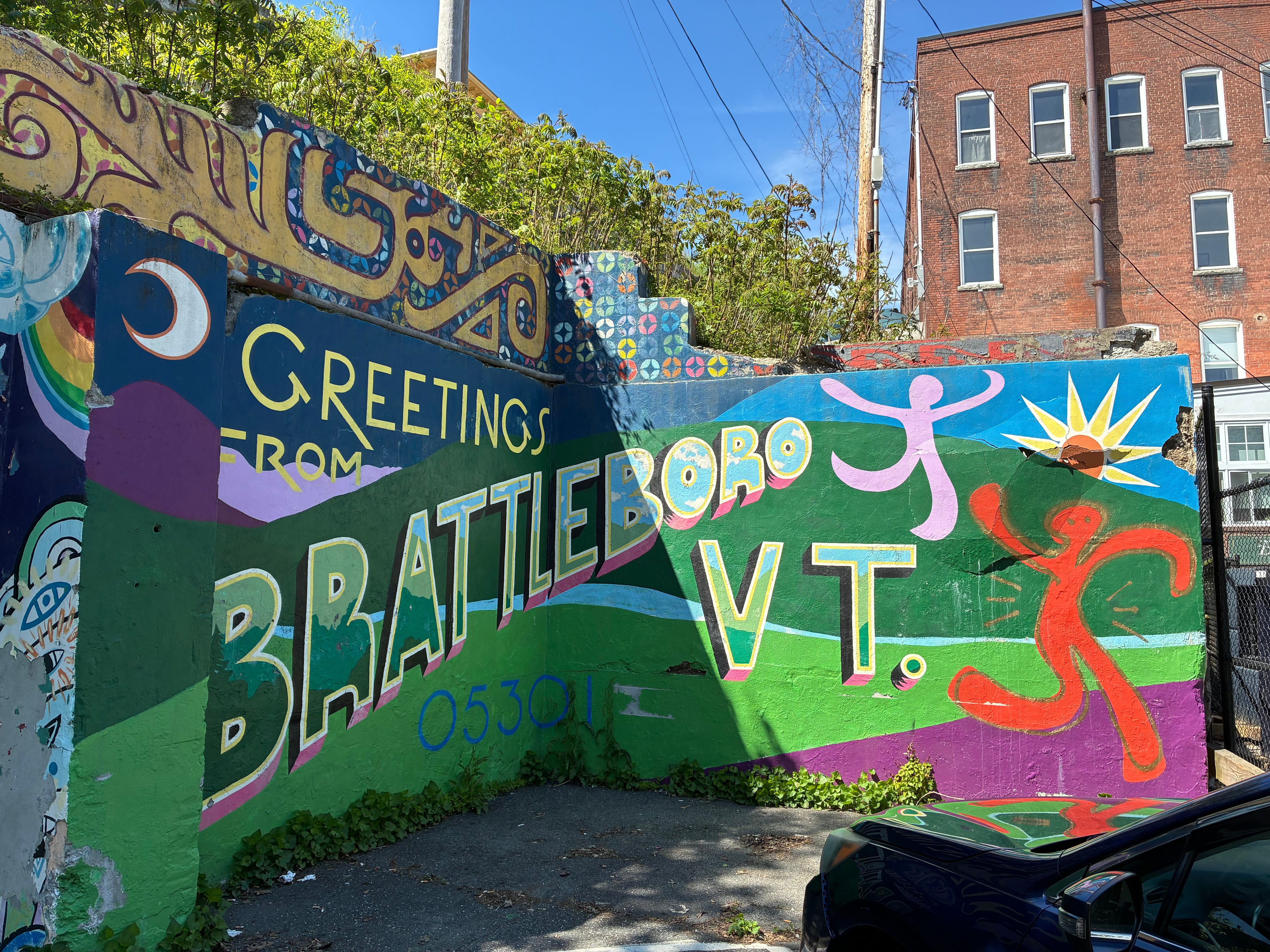
If you’re new here: the Vermont 251 club is a decades-long initiative to visit (not just drive through) all the named locations (towns, cities, villages, etc.) in Vermont. There are now 252, but the club has elected not to update its name.
I’ve been doing this since last summer. I stopped over the winter, as I am not a terribly confident winter driver. But now I’m back! The main post is here, with the list, and as each one is visited, the name becomes a live link to that post.
You can spot them from a block away.
Late thirties, both of them. The wife has the kind of physique that comes from a diet built around lentils and a Tuesday-Thursday-Saturday cycling habit. The husband is leaner still, with the slightly stooped posture of a man who reads a lot and has opinions about gear ratios. There’s a toddler in a soft-structured carrier on his back and an infant strapped to her chest in something hand-knit by someone in their book club.
They are walking down Main Street in Brattleboro at a deliberate pace, stopping at storefronts, pointing things out to the toddler, who is too young to understand any of it but is being Shown Cultural Things anyway.
I watched a couple just like this pause in front of a bookstore window for what had to be three full minutes, the husband crouched down beside the carrier to direct his son’s attention at — I don’t know what, exactly. A poster. A flag. Some artifact of correct values.
And I noticed, with the small honesty I try to bring to these essays, that my reaction to them was a kind of low-grade smugness. Not contempt — I like these people in the abstract, and I’m always genuinely glad to see an involved father. But they were such a Type that I couldn’t quite look at them as individuals. They were a category. They were doing the thing the category does.
And I was standing across the street being amused by them, which is, of course, its own category of behavior with its own predictable adherents.
The town itself has, in fairness, given them a great deal to point at.
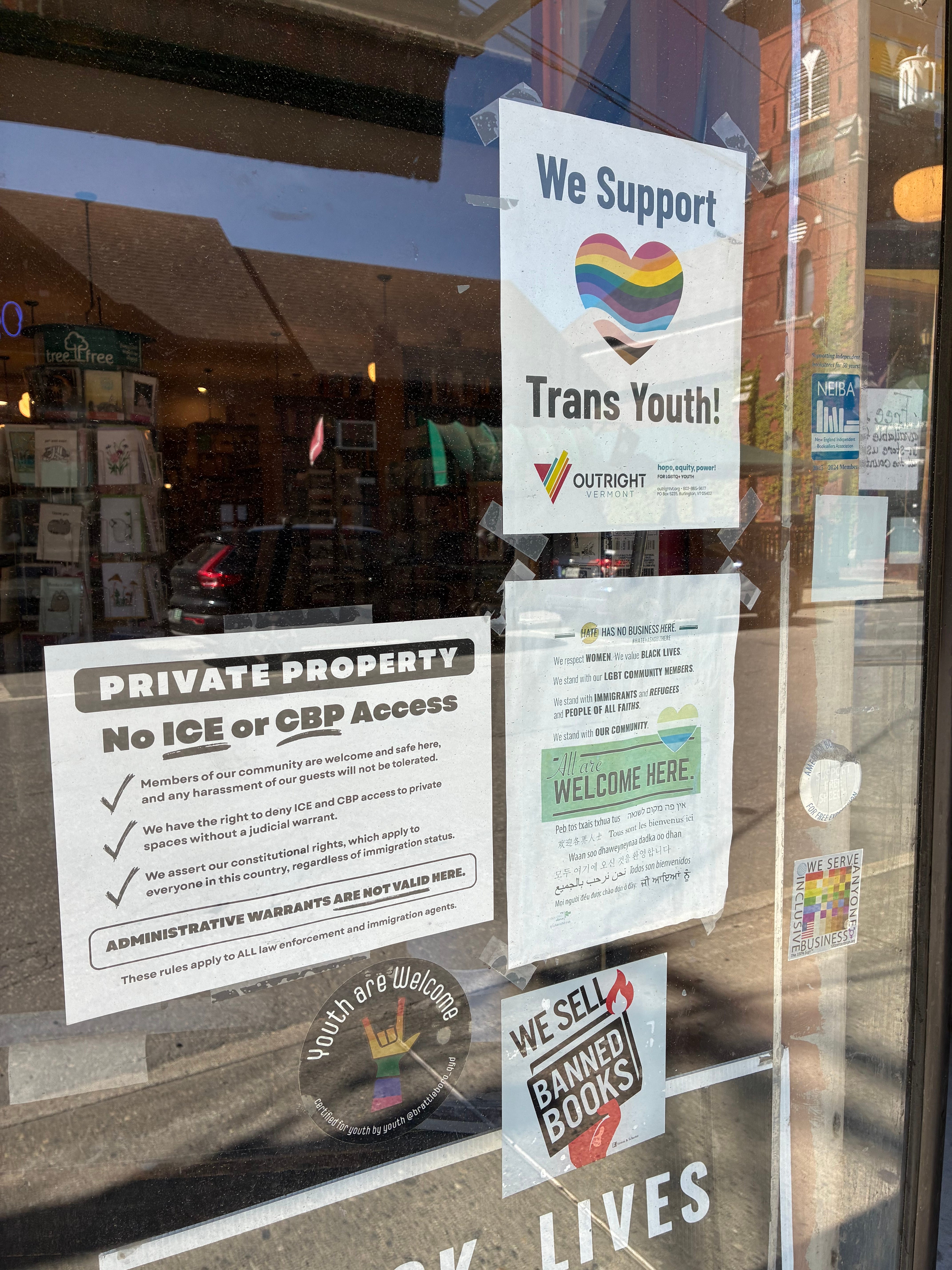
Every storefront on Main Street is a manifesto. The bookstore door, typical of all the downtown stores, is a small political pamphlet: We Support Trans Youth. Private Property — No ICE or CBP Access. Hate Has No Business Here. All Are Welcome (in eleven languages). We Sell Banned Books. LGBTQ Youth Are Welcome. Black Lives Matter, in the corner, almost as an afterthought, like a hymn that’s been sung so often nobody hears the words anymore.
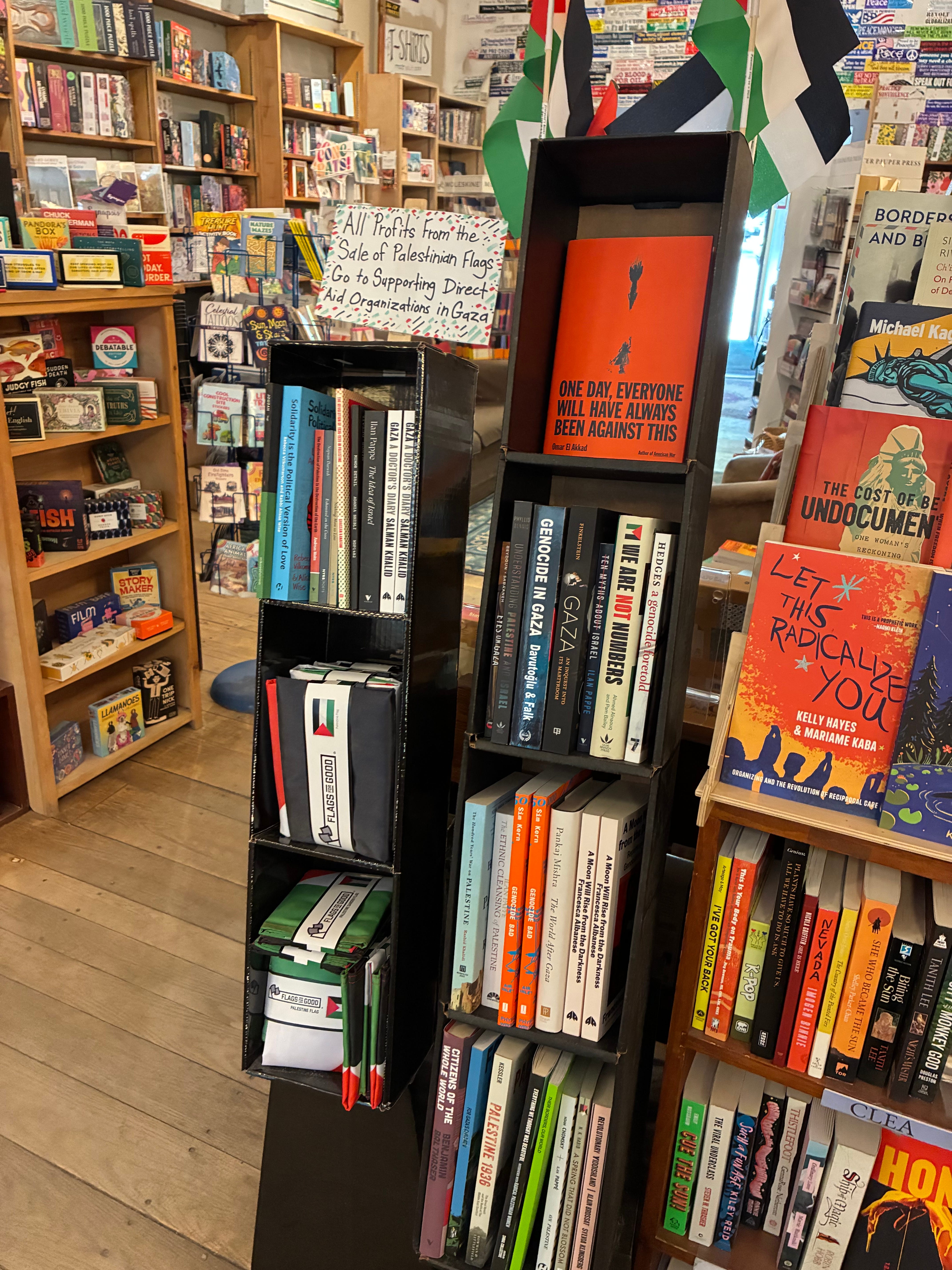
Inside, a tower of books on the “genocide” in Gaza stands next to a hand-lettered sign explaining that profits from the Palestinian flags go to direct aid organizations. None of it is wrong, exactly. Some of it is rooted in something admirable.
But the cumulative effect of walking through Brattleboro is that every surface is shouting a value at you, and the values are all aimed at the same imagined enemy, and you start to feel less like a customer, visitor, or neighbor — and more like a recruit.
I bought a book anyway. The bookstore is good. That is the thing about Brattleboro that complicates the easy critique: the bookstores are good, the art supply store (Zephyr) is excellent, the galleries are full of work worth seeing.
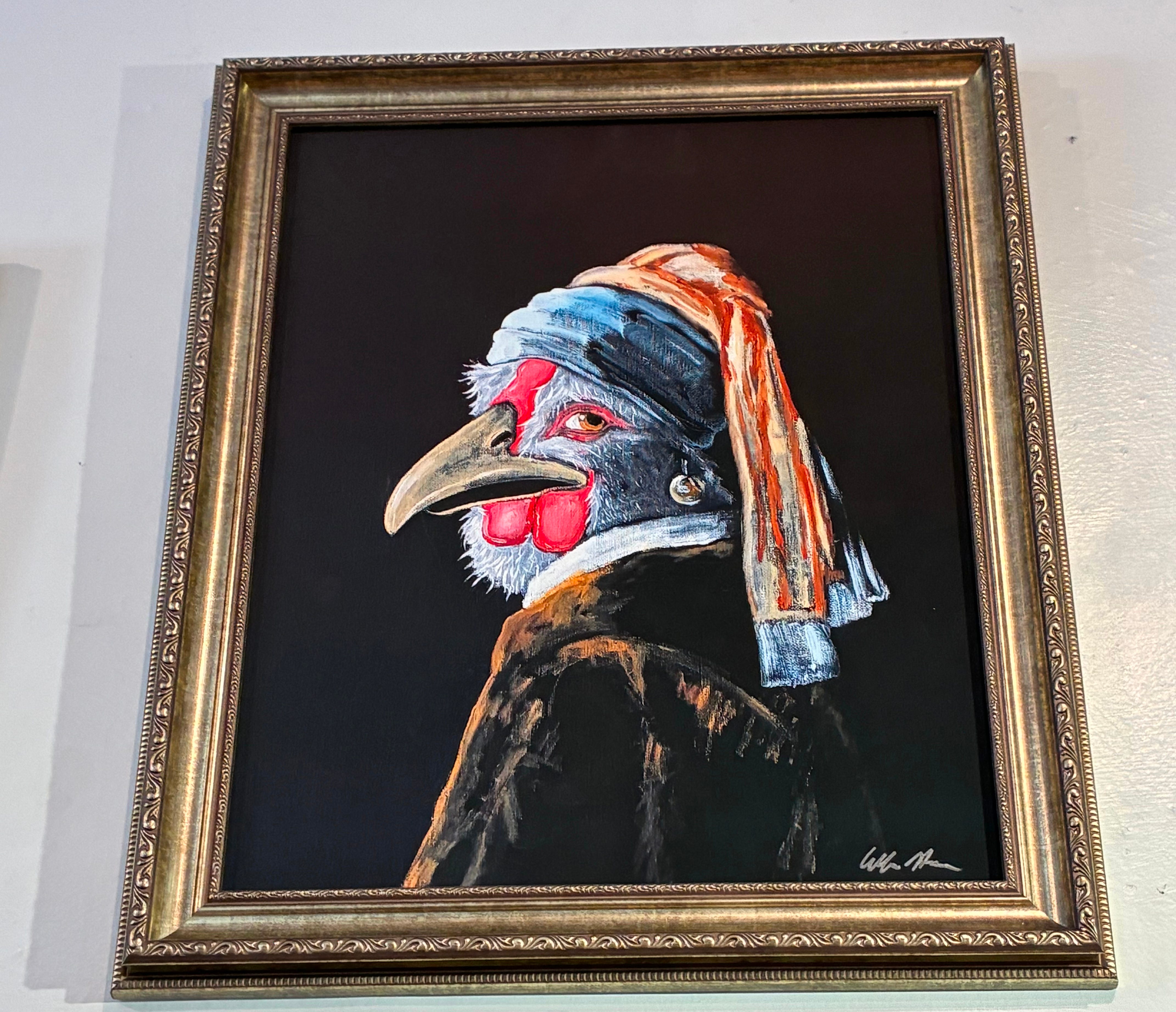
I stood for a long time in front of a giclée print called Chick with the Pearl Earring — a guineafowl in Vermeer’s pose, blue and rust turban, the same sidelong glance — and laughed out loud.
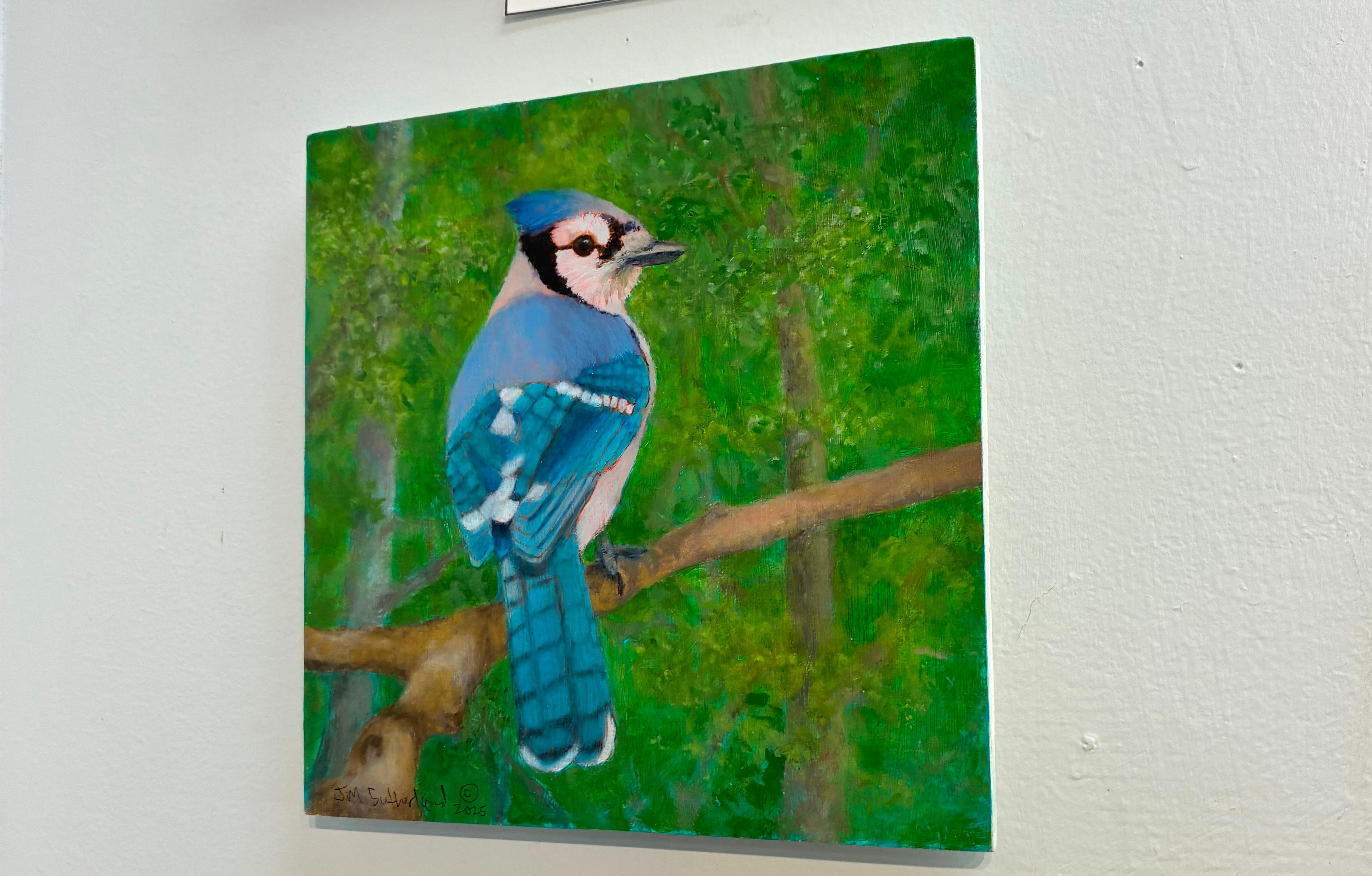
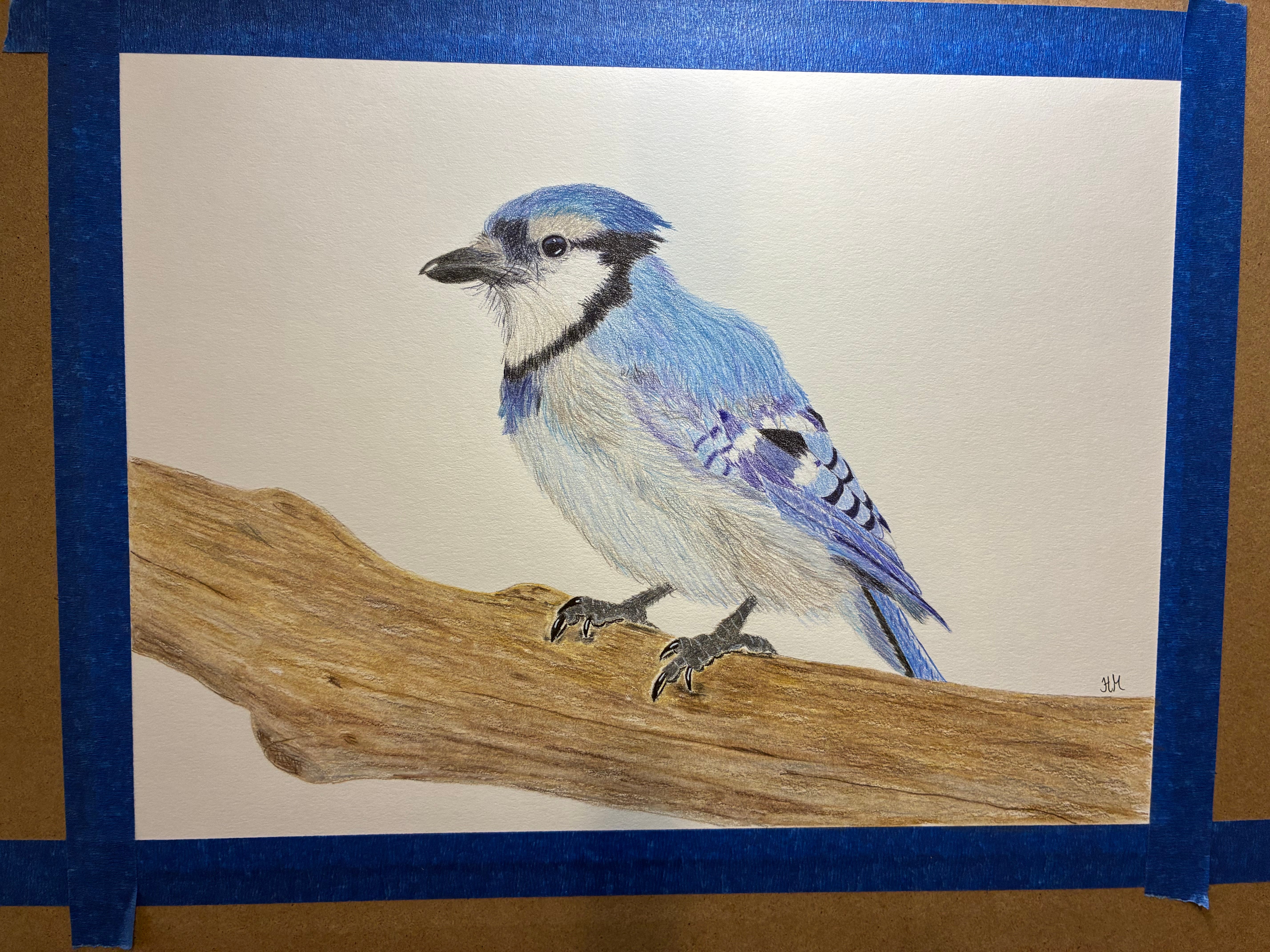
Down the wall, a small oil painting of a blue jay on a branch caught me in a different way: it was lovely, and while it is absolutely better than the blue jay I drew earlier this year, it wasn’t miles better. It wasn’t “these two artists do not belong on the same planet” better, which gave me a small, secret jolt of confidence I hadn’t expected to find in a stranger’s gallery.
Mine:
The performance is real. But so is the work. That’s what makes the place difficult to write about honestly. It is not a town pretending to have culture. It has culture. The question is whether the culture knows the difference between being and signaling.
And then, in a basement I only found by following pointed finger signs — the first one of which I almost missed — I found my answer.
The Brattleboro Museum of Things Tiny and Found
It opened a month ago. I had never heard of it, and walked in mostly because the window by the door, after following the signs, had something small and detailed in it and I am, at heart, a person who cannot resist small and detailed things.
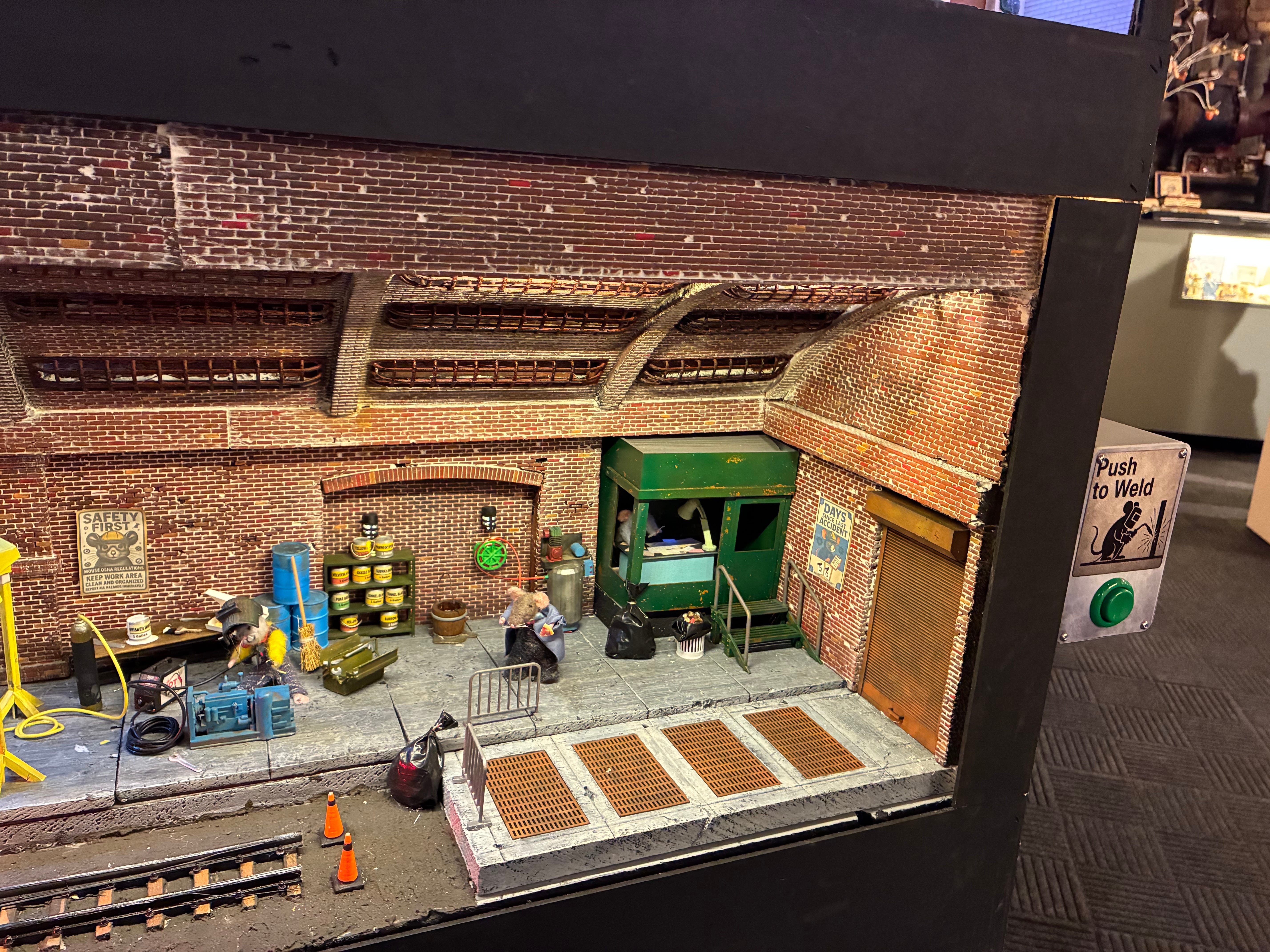
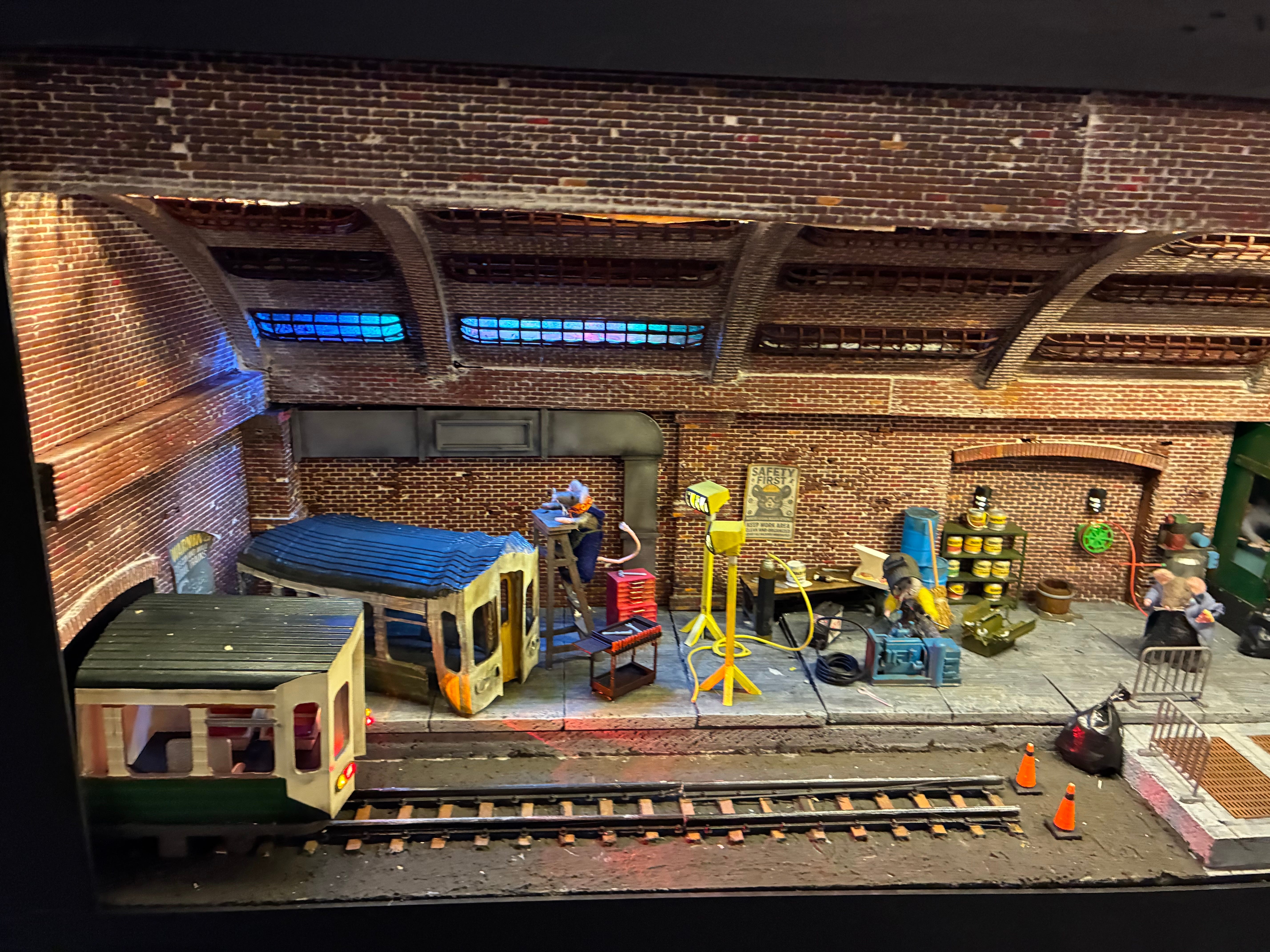
The premise is mice. Specifically: an entire miniature city built at mouse scale, populated by needle-felted mice going about their commute, their shopping, their welding. A subway station called 54th Whisker Way, tiled in a mosaic that any New Yorker would recognize. A subway car decked out with a Christmas wreath. A train repair yard where one mouse in coveralls bends over a welding rig while another perches on a ladder, inspecting a damaged car. Vending machines that dispense Wedge O’Cheese and Cheez-It. A perfume ad for Bleu de Cheese. A digital alerts board that reads, in scrolling orange text: PLEASE WALK. Don’t Scurry. Another, a moment later: Cat Alert: Level Orange. A poster on the wall: If you see a cat… say something.
The escalators move. There are videos.
The welding rig works — a tiny mouse in a welder’s mask, a real spark of light, the slow rhythm of someone doing a job. There is a button on the wall outside the diorama labeled Push to Weld, with a cartoon mouse in safety goggles. You push it. The mouse welds.
A small child near me pushed it three times in a row, and the adult with her did not stop her, because there was nothing to stop. The whole thing is built for exactly that response.
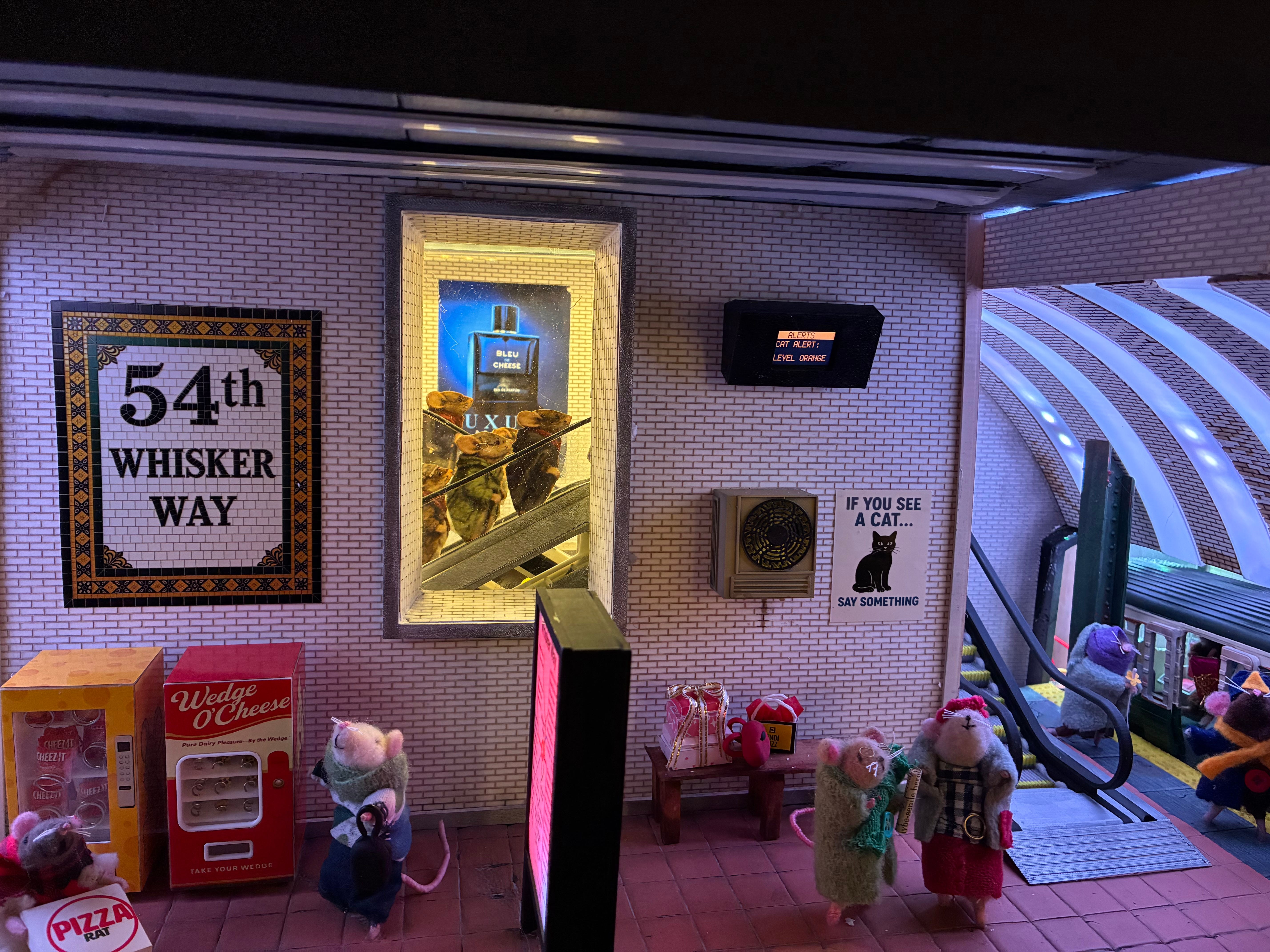
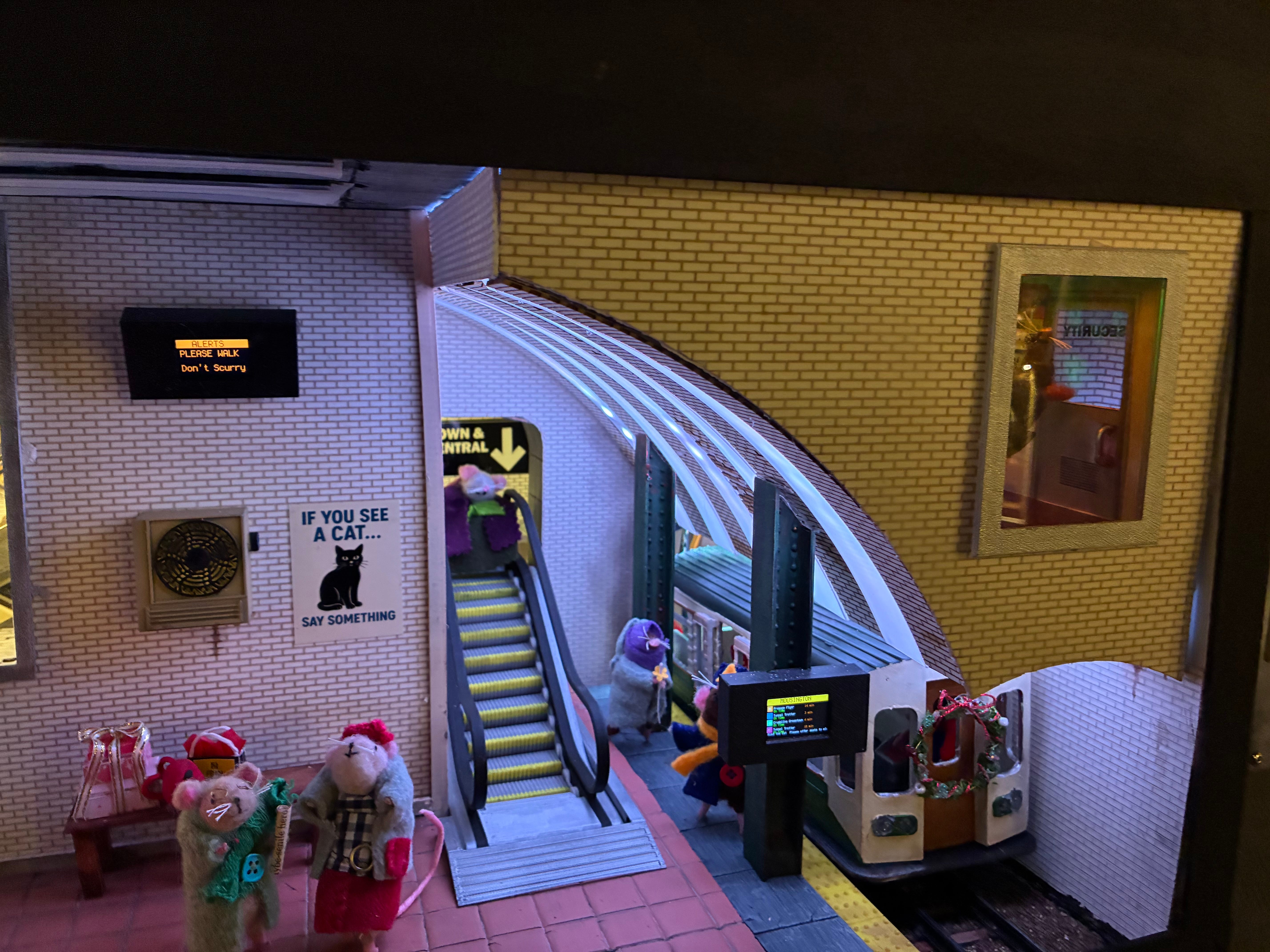
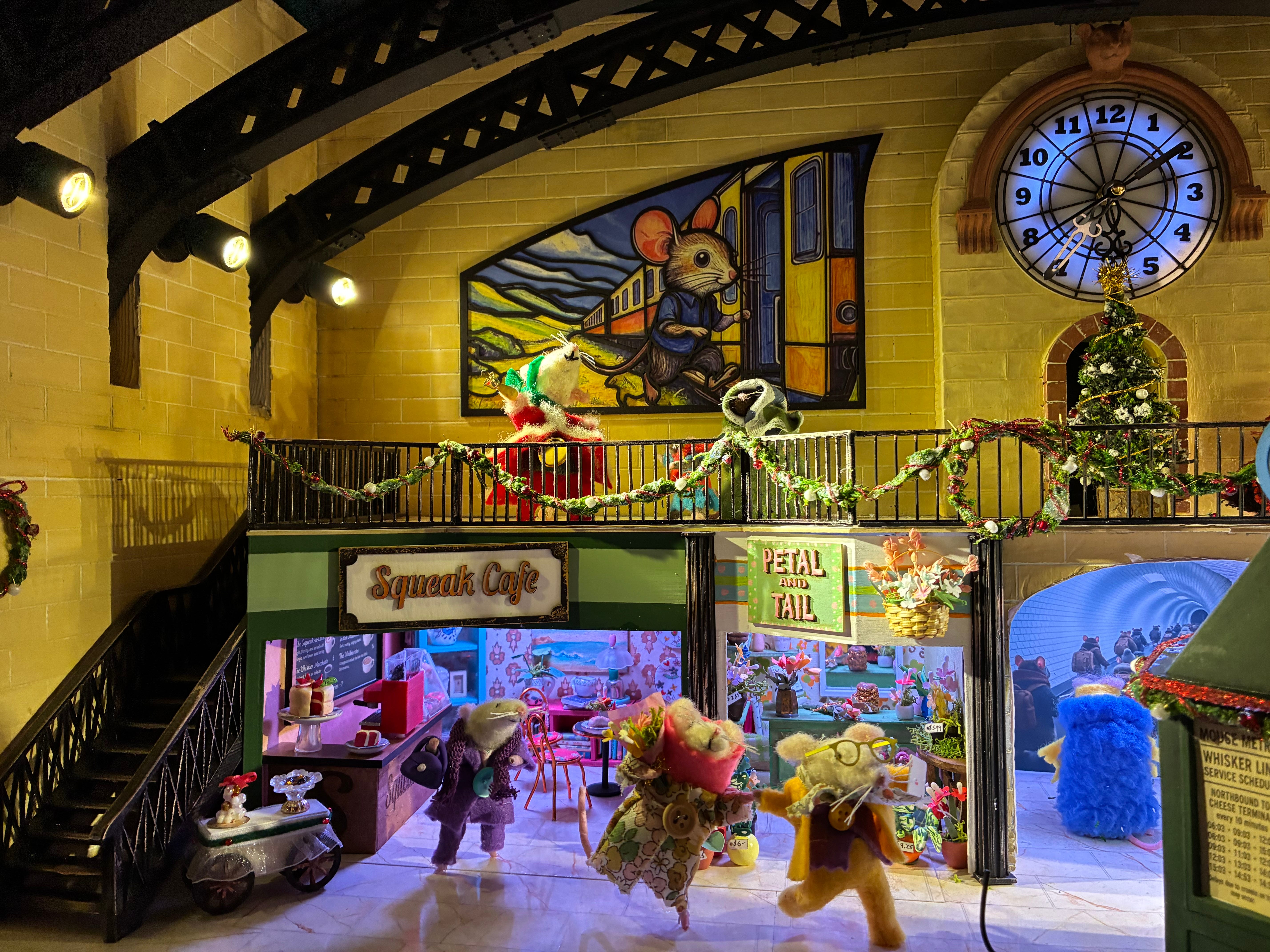
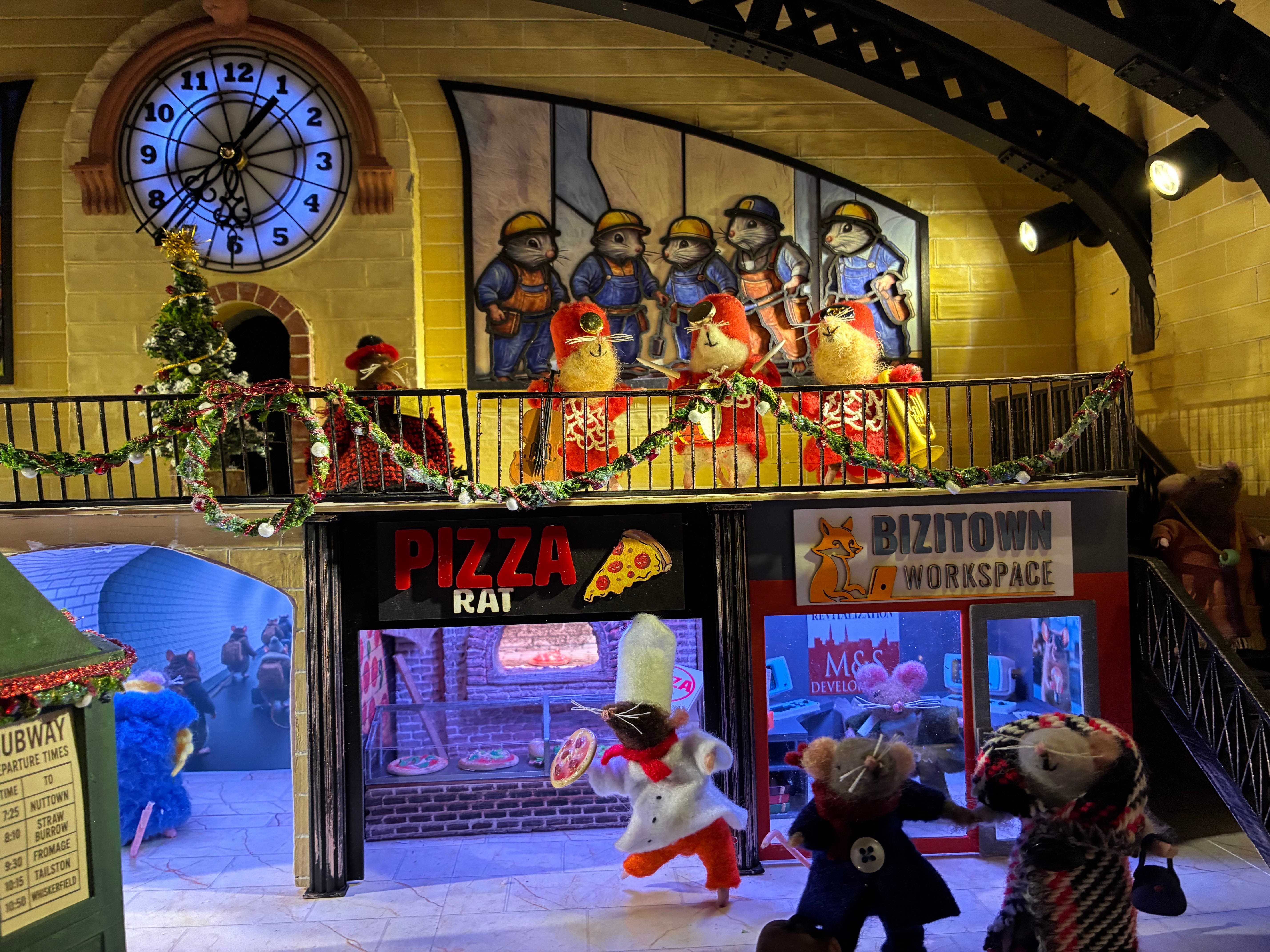
It was a delight on its own merits, and deserves to be called such without comparison to anything else.
But it was a delight for deeper reasons, too.
Nobody made this museum to demonstrate their values.
Nobody made it as a statement.
Nobody made it to be admired by an imagined audience of correct people watching from a great distance.
Somebody — several somebodies, I have to assume, given the scope — made it because the idea of a mouse subway system with a Cat Alert Level Orange was funny, and because they wanted to see if they could build it, and because once they started building it they could not stop. The “Days Since Last Accident” sign in the welding shop has a tiny cartoon bear on it. The Mouse OSHA Regulations poster is, on close inspection, actually legible. Someone wrote the regulations. Someone wrote the regulations for a fictional Mouse OSHA so that a sign on a wall in a diorama in a museum almost no one has heard of yet would be funny to the one in fifty visitors who leaned in close enough to read it.
That is what real culture looks like. It is built by people who cannot help themselves. It does not announce its values; its values are visible in the quality of the attention paid to the work.
The maker of the 54th Whisker Way mosaic values craft, and humor, and the small reward of a joke that lands only for the person who looks closely. You do not need a sign on the door to tell you any of this. The room itself is the sign.
The Two Hour Side Quest
I had a plan. The plan was to stop in Dummerston — home to Vermont’s largest covered bridge — on the way back, and then Newfane, and knock out two more 251 towns while I had the momentum. It was 3:30 in the afternoon, the sun was good, and I had been pleased with myself for not getting on the interstate immediately. The interstate is for people who have given up.
Reader, the interstate is for people who have correctly assessed the situation.
What I did not know, because nobody had ever bothered to tell me and I lacked the intelligence to anticipate this, was that the entire region between Brattleboro and approximately the rest of civilization is a cellular dead zone. Not spotty. Not patchy. Not “you might lose service near the river.” Zero. Well, a rounding error of zero. The kind of zero where you check your phone three times in a row to make sure it isn’t a settings problem.
Google Maps, my chosen oracle for this expedition, responded to the loss of signal with what I can only describe as malevolent passive aggression.
It would not tell me whether to turn right or left until I was so close to the intersection that one more foot of forward motion would commit me to a direction. I would stare at the screen. The screen would stare back. A pickup truck behind me would not be staring; the pickup truck would be wondering, with increasing intensity, what was wrong with me. I would pick a direction.
I would pick what felt right, which is what people say when they mean they had no information and committed anyway.
For three to five miles, nothing. The road would unspool. I would begin to relax. Then, with the timing of a comedian who has been waiting for the room to settle, the screen would start in with the spinning wheel of death and give me: Re-routing.
Re-routing meant I had gone the wrong way.
Well, I am ninety percent sure it meant I had gone the wrong way.
It might also have meant the app was bored.
There was no way to confirm, because the moment I tried to actually look at the new route, the phone would think about it for a second and then, almost apologetically, inform me: Cannot reach the internet.
This happened four times. Maybe five. I lost count somewhere around the third dirt road that descended into a kind of leafy tunnel where the GPS dot on the map drifted lazily through what I am pretty sure was an open field. Each time I had to turn around and double back until I found enough signal to reload the map, and each correction nudged me a little closer to the interstate I had been so smug about avoiding.
This, incidentally, would have been the perfect moment to use an Xfinity hotspot pass — the kind of thing that, in theory, exists, and that I have written about before for the simple reason that it does not, in practice, exist. The website will not sell you one. The store will not sell you one. The employees at the store will gently, patiently explain that they cannot help you with the website, and then they will refer you back to the website, completing the circle.
I have made my peace with this, in the sense that I have not yet driven to Philadelphia to set their headquarters on fire.
Then…my hearing aids died.
I should explain that my hearing aids are dying in the slow, dignified way that expensive medical devices die: not all at once, but in a series of escalating betrayals. I am saving up to replace them (and a few of you longtime readers have upgraded lately to help — thank you!! I see you, I appreciate you.)
This drive was part of the reason why this is starting to feel more urgent. There is a particular flavor of anxiety that visits a deaf woman in a cellular dead zone in rural Vermont when her hearing aids cut out and she has approximately a quarter tank of gas, and I would like to describe it precisely so you understand the texture of it.
It is the anxiety of running rapidly through a checklist of escape options and discovering that all of them require functioning hearing. If I had to stop and knock on a door — which I kept reminding myself was an option, because it was an option, because Vermonters are decent people and this is what doors are for — I would have to figure out how to ask for directions without sounding deaf, which means modulating my voice to a register I cannot hear myself producing, and then asking the person to please write the directions down, which makes me sound either drunk or shady or both.
I rehearsed it in my head while I drove. Hi, I’m so sorry, my GPS is out and I’m a little turned around, would you mind writing the route down for me? My hearing aids just died and I want to make sure I get it right.
That sounds normal. Right?
That sounds like a normal sentence a normal person would say.
Right?!?
I never had to knock on a door. I found Route 35, which I knew — because I had memorized it that morning, in a small act of analog foresight that I would like credit for — would dump me onto the interstate. The whole side quest had taken just over two hours. I had visited zero additional 251 towns. I had aged perhaps a year.
The Skill I Don’t Have
I grew up without a number of skills that most adults take for granted. Reading a paper map is one of them. Navigating by landmark and cardinal direction is another. Knowing, when you are lost, how to get unlost by reasoning from first principles about which way is north and where the sun is and what river you crossed — that is a skill, and it is a skill I do not have, and the reason I do not have it is that nobody taught me, and the reason nobody taught me is the kind of childhood I am not going to get into in a 251 essay.
I have spent my adult life filling in those gaps one at a time, usually in moments exactly like the one I just described, when the absence of the skill announces itself with the full force of the situation that requires it.
My friend Josh Slocum who lives in Montpelier and who I have mentioned in this series before, is going to teach me to read a map soon. Not a GPS. A map. The folded paper kind, the kind you are required by law to refold incorrectly the first six times.
He is the right person to teach this because he is the right person to teach a lot of things — he is one of those people who grew up with the analog skills most of us are losing, and who, more to the point, is very, very good at explaining them. He knows how to take something he understands and break it down for someone who doesn’t. That is a much rarer talent than knowing the thing itself.
I have been telling him for weeks now that he should start a Substack teaching practical life skills. Map reading. How to balance a checkbook on paper. How to address an envelope. How to introduce yourself to your neighbors. How to fix a thing instead of replacing it. How to talk to mechanics. How to drive in snow (which he also taught me, and while I am unconfident in this task I am 500% more confident than I used to be).
The unglamorous structural competencies that nobody is teaching anyone anymore, that nobody is being shown, in exactly the sense I was trying to articulate above with the mouse museum. He keeps demurring. He has a podcast and a job and a sourdough starter and only so many hours.
The comments on this post are open so you can tell him what a great idea it is.
Coda
I made it home. The interstate, it turns out, is fine. The interstate gets you places. The interstate has signs that tell you where you are, in advance, with sufficient lead time to make a decision, which is more than I can say for either Google Maps or the values some towns spend a great deal of energy advertising.
Brattleboro is a good town. The bookstore is good, the art store is excellent, Zephyr will see me again, and the Brattleboro Museum of Things Tiny and Found is, on its own, worth the drive from Montpelier. Go see it. Push the welding button. Read the Mouse OSHA regulations. Notice that nobody on the wall is telling you what to think about any of it.
And if you go, take a paper map. Just in case.
I have been following you for quite a while, and I have to let you know how much I love your writing and your unique way of showing vulnerability with such intellectual insight. You have a beautiful combination of logic and artistic sensitivity, and it really resonates with me. I also want to use this opportunity to ask Josh to teach us the analog things! Thanks for your content.
So good. 1) I prefer your bluejay. 2) the mouse museum is priceless and I have access to Brattleboro. 3) cellular dead zones--welcome to the world of inertial navigation--like a 90s vintage 747 over the north Atlantic with a laser ring gyro hoping to make landfall. 4) in Vermont the only justification for private property is to claim ICE isn't welcome. 5) the attentive father probably also puts earmuffs on the kid and wanders through the molly cloud at a phish festival thinking the earmuffs signal responsibility