
Shelburne (20/252)
a Vermont 251 post

If you’re new here: the Vermont 251 club is a decades-long initiative to visit (not just drive through) all the named locations (towns, cities, villages, etc.) in Vermont. There are now 252, but the club has elected not to update its name.
I’ve been doing this since last summer. I stopped over the winter, as I am not a terribly confident winter driver. But now I’m back! The main post is here, with the list, and as each one is visited, the name becomes a live link to that post.
Special Treat: Crossover Event!
My great friend Josh Slocum who knows how everything works, accompanied me on this one and he has written about it — from a different angle — for The Blaze. He took many more pictures than I did (though we shared, so he probably took some of the ones in this post; I don’t recall now). Read his take here.
Shelburne sits about seven miles south of Burlington on the shore of Lake Champlain, has a population of around 8,100, and is — let me put this gently — not anyone’s idea of a place where the median household struggles.
Median household income clocks in around $115,000. Median age 51. The town is 46% water by area, most of that water being Lake Champlain, which means a meaningful fraction of the tax base is people who bought lake frontage when lake frontage was something a Vermonter could afford.
It is a pretty town. It has the kind of downtown that you don’t so much walk through as glide through, the way you move past expensive things in a well-lit store.
There is one obvious reason to make Shelburne an official 251 visit, and Josh Slocum and I went on Memorial Day to do it.
The Shelburne Museum is the largest art and history museum in northern New England. It comprises thirty-nine exhibition buildings — twenty-five of them historic structures that were painstakingly relocated to the museum grounds — spread across forty-five acres, holding more than 150,000 objects.
We were there for hours and saw roughly a quarter of it. This is not because we are slow; it is because the place is impossibly, almost defiantly large.
It is also, from end to end, American. I do not mean American in the sense of flag-waving, or in the sense of self-congratulation, though I appreciate and admire things that are American in those senses.
I mean American in the older sense: a museum that takes the objects ordinary people in this country made, used, hauled, fixed, played with, and were imprisoned in, and says these things are worth preserving. The art is in the folk art. The art is also in the steamboat, the jail, and the cast-iron banks.
This was a deliberate choice. It is, in fact, almost certainly the most interesting thing about the museum, and about the woman who built it.
Electra
Electra Havemeyer Webb was born in 1888 to Henry Osborne Havemeyer, President of the American Sugar Refining Company, and Louisine Elder Havemeyer. They were among the most important American collectors of European Impressionism. Their advisor and close friend was Mary Cassatt. Electra grew up in a Fifth Avenue mansion whose interior was designed by Louis Comfort Tiffany — silk brocades, ivory carvings, Manets and Monets and Degas pastels on the walls.
In 1910 she married J. Watson Webb, the great-grandson of Cornelius Vanderbilt I, which brought her into a second order of wealth on top of the first. The young couple summered at the Webb family estate in Shelburne, where Electra would eventually build the museum.
But before any of that, when she was nineteen years old and had just inherited a fortune from her father, she bought a cigar store Indian for fifteen dollars outside a tobacco shop in rural Connecticut.
That was the first object in what would become the museum.
Her mother, on visiting Electra’s home in Shelburne years later and taking in the furnishings, exclaimed — and this is the actual recorded quote — “How can you, Electra, you, who have been brought up with Rembrandts and Manets, live with such American trash?”
American trash: Quilts. Weathervanes. Hooked rugs. Carved figureheads from old sea captains’ ships. A 220-foot steamboat. Cigar store Indians. Cast iron toy banks. A jail.
Electra spent the rest of her life making the case that her mother was wrong. She once explained it to a visitor as simply as possible: “I try to find the art in folk art.”
In 1942, during the Second World War, this heiress to the Vanderbilt and Havemeyer fortunes joined the Civilian Defense Volunteer Organization and directed the Pershing Square Civil Defense Center and its blood bank.
During the First World War, she had driven an ambulance in New York City and been named Assistant Director of the Motor Corps. The woman who could have spent her entire life as a society wife with a famously good art collection instead drove ambulances, ran a blood bank, and built a museum to one of the most despised categories of art: the things made by ordinary Americans for ordinary use.
In 1947, when she was fifty-eight, she opened the museum. She described it as “an educational project, varied and alive.” Within a few years she had bought a fifty-ton slate jail from the town of Castleton for one dollar per ton and had it trucked sixty-four miles overland on special dollies with twenty-four rubber-tired wheels. The most difficult obstacle on the route was the Vergennes underpass of the Rutland Railroad, where the clearance was five inches. The whole trip took three days at speeds up to seven miles per hour.
A few years after that, she did the same thing with a steamboat. We’ll get to that.
After her death in 1960, her children built a memorial building to her on the museum grounds. Its exterior is modeled on a Greek Revival house in Orwell that she’d wanted to buy and never did.
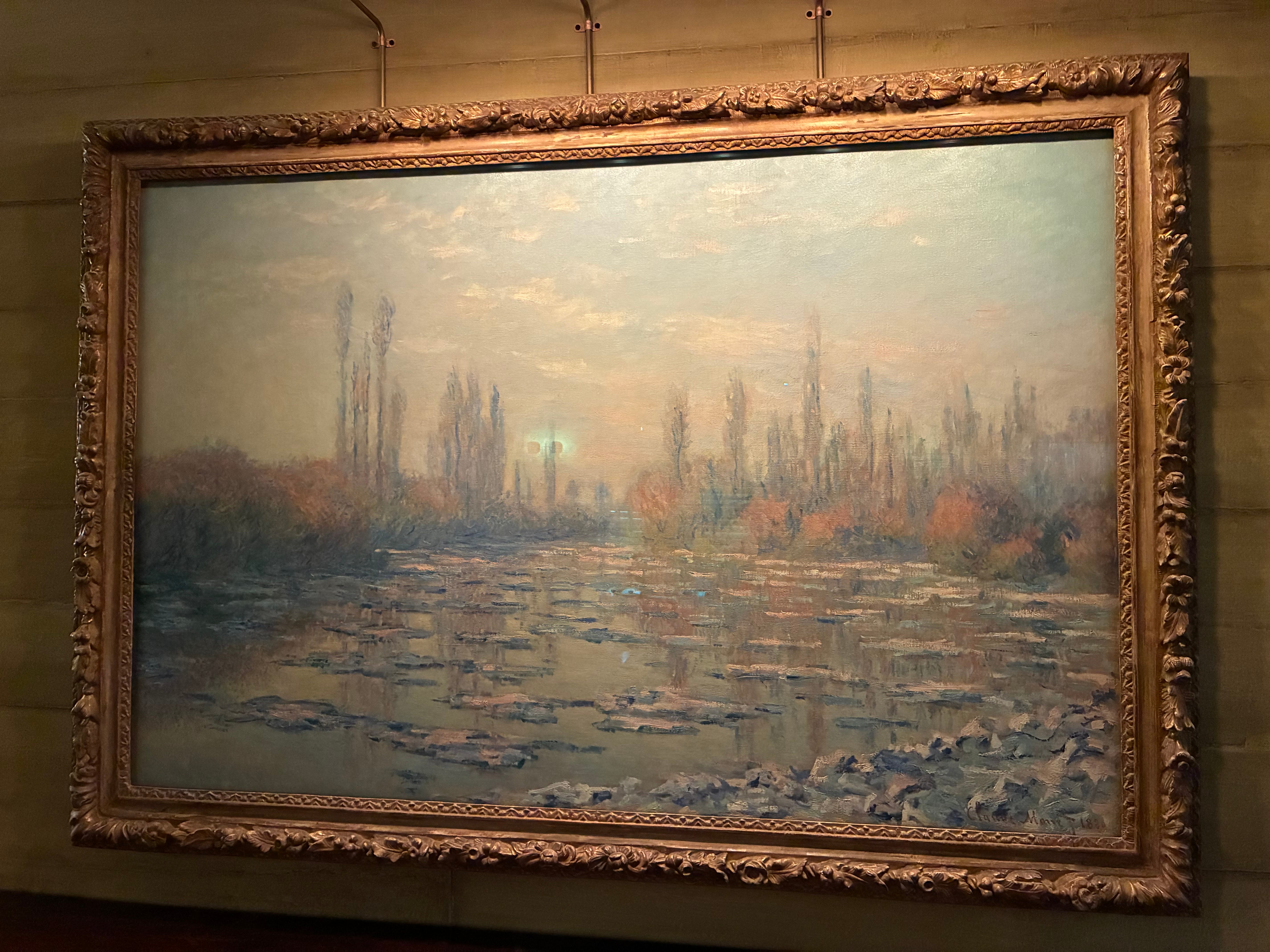
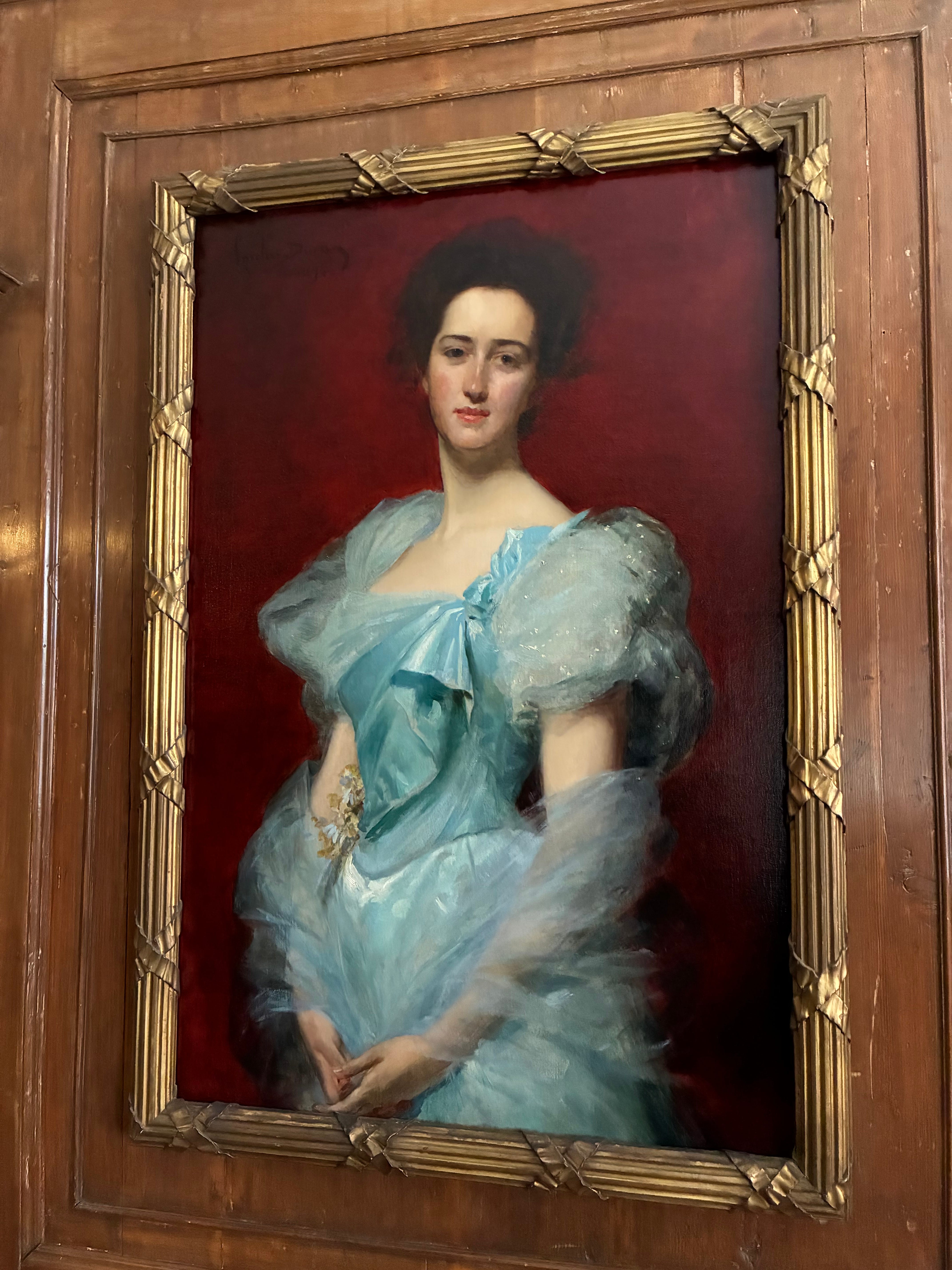
Inside are six period rooms from her parents’ 1930s Park Avenue apartment — the Tiffany-designed life she had been raised in — installed exactly as they were, with the family Monets and Manets and Degas pastels on the walls.
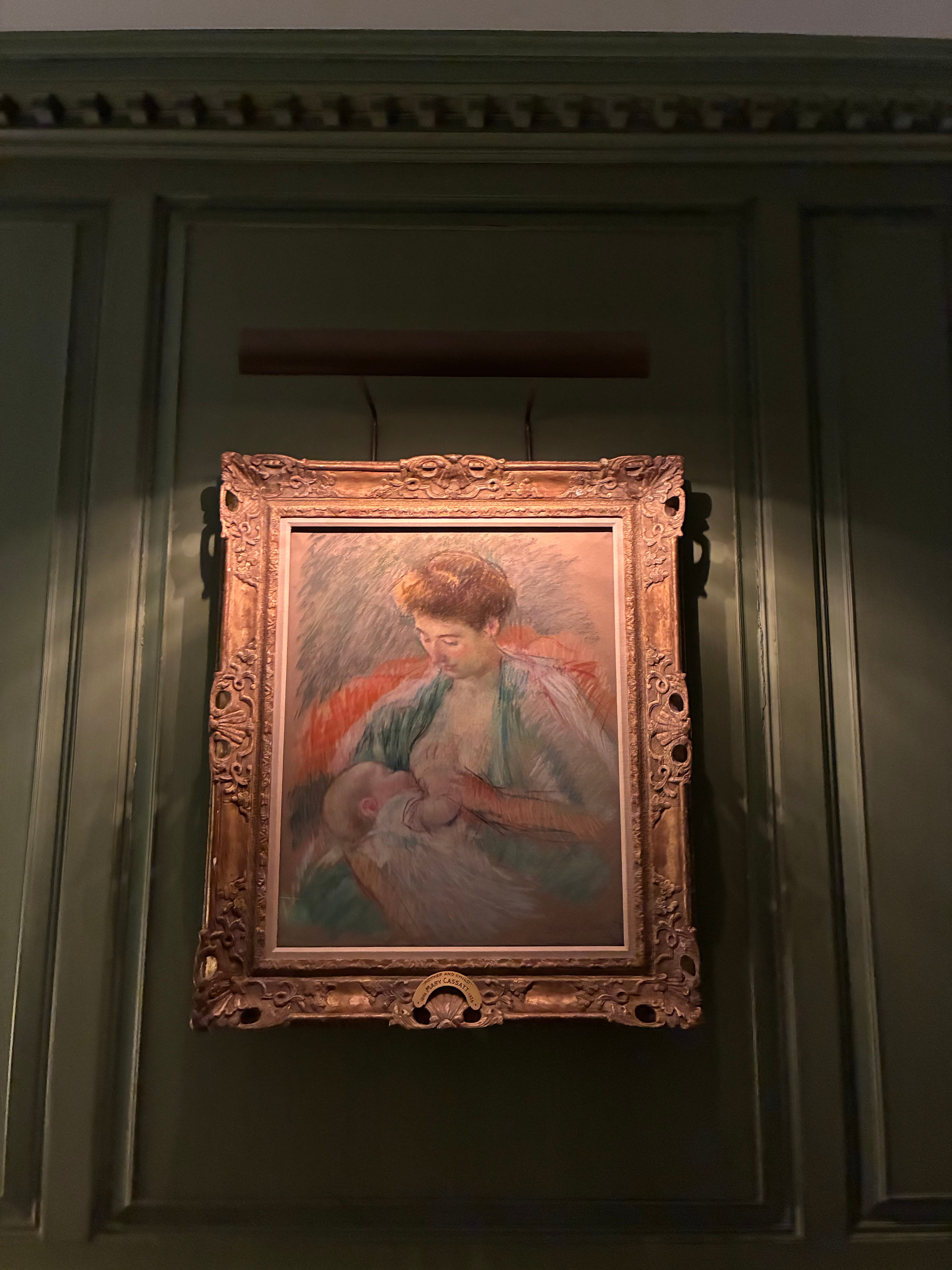
Josh and I went through the Memorial Building. There are several original Monets in there. Some of them were interesting and some were….not.
All “fine art” isn’t quite fine, it turns out.
Then we walked out into the rest of the museum, which is full of the things her mother called trash.
I cannot think of a more graceful way to win an argument.
The Toy Shop
We spent a long time in the Toy Shop. The collection includes cast iron mechanical banks from the 1860s and 1870s, an operating American Flyer train layout, dollhouses, dolls in bisque and papier-mâché and wax, and about thirty automata — large mechanical toys, several by Gustave Vichy of Paris, including a drunken chef, a magician, and a clown walking on his hands.
This is one of the parts where Josh is invaluable.
I have been to the Shelburne Museum before, without him. The way I move through a place like the Toy Shop on my own is: That looks cool. That’s neat. Oh, nice color and angles. I should draw it. I notice the surface — the patina on the iron, the angle of a doll’s arm, the way light hits a glass case. I think about what could become a study, or a finished piece.
It’s not a bad mode. It’s just the only mode I have when I’m alone with objects.
With Josh, I learn how it all works.
Josh is a walking repository of knowledge about honest mechanicals: how the springs in an automaton release in sequence, what the cam profile has to do to make the drunken chef wobble believably, what gears the clockwork uses and why. He can stand in front of a single cast-iron toy bank and explain the mechanism that flips the coin into the slot when the figure’s arm is pulled, and which manufacturing techniques would have been available in 1880 to produce that mechanism at scale. He notices the welds. He notices the rivets.
He notices the things I would never have noticed.
This changes what the visit is. It stops being a series of aesthetic encounters and becomes an extended education in what it took to make these things. The work. The skill. The dignity of solving a hard mechanical problem in iron, by hand, in a shop with no electricity, and then doing it a thousand times.
That theme — the work — held through everything we saw.
The Jail
The jail came from Castleton, Vermont, which sits in the heart of the state’s slate quarry district. It was built in 1890 entirely of slate, because slate was what they had. Two cells, a jailer’s anteroom, one small barred window, a riveted iron door. It served the town for over fifty years before the museum bought it for one dollar per ton in 1953 and moved it intact.
You can walk into the cells. They are extremely small, extremely dark, extremely cold even on a warm May day.
The acoustic of a slate cube is its own kind of punishment.
What struck me, standing in there, was how much the building assumes about the future: the people who built this building were working with what was available, and what was available was very heavy rock. They cut it. They squared it. They stacked it into walls so thick that fifty tons of slate could be picked up on dollies seventy years later and moved sixty-four miles overland without falling apart.
There is something almost moral about that level of construction. It assumes that the building you are making will outlast you, will outlast your grandchildren, will potentially outlast its original purpose entirely and become something else. The Castleton jail was a jail for fifty years and has now been a museum exhibit for seventy.
That is the kind of math you can do when you build out of slate.
The Miniatures
Tucked away in the brick farmhouse — the only original building on the museum grounds — is a collection of miniature dioramas crafted in the 1940s and 1950s by Helen Bruce, an antique dealer in New York City who made them as gifts and commissions for her friend Electra. They are tiny scenes from nineteenth-century domestic life: parlors, millinery shops, sitting rooms, complete with miniature furniture and miniature dolls and miniature wallpaper that Helen Bruce had made specifically for them.
I love miniatures. I think it’s the same nerve that responds to pencil drawing — the way reducing scale forces precision, the way the act of making something small honestly requires you to understand the full-size thing better than you would if you were making it full-size.
Josh, of course, was reading them differently. He was looking at the joinery of the miniature furniture, the way the chair legs had been turned on a tiny lathe, the way the fireplace andirons had been cast in miniature using techniques borrowed from the full-size foundry process. He kept saying things like, Look at how they did that hinge, and also explaining the historical context of the decor in the miniatures.
Here are a bunch of pictures that look like full-size rooms but are actually just close ups of miniatures.
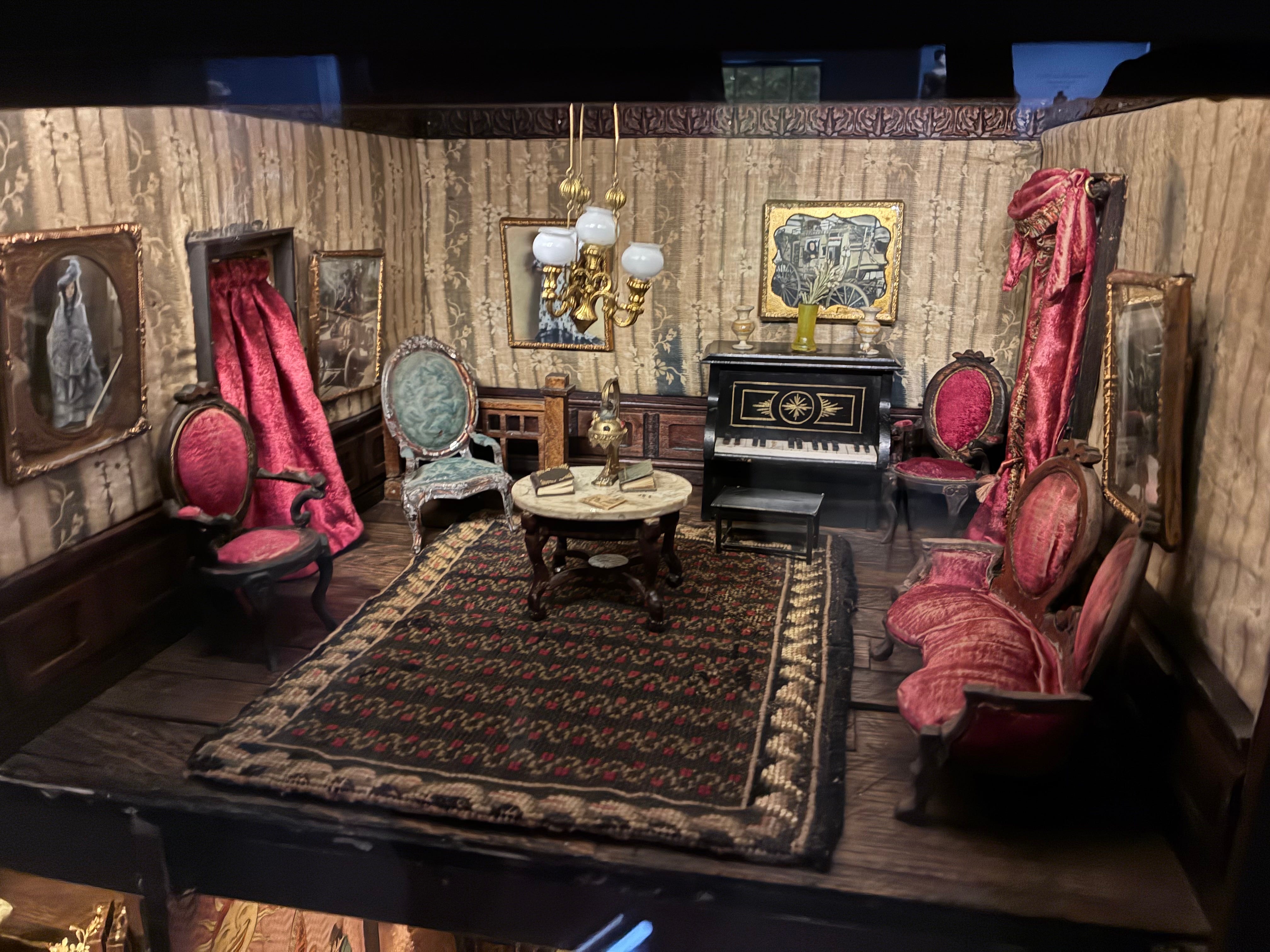
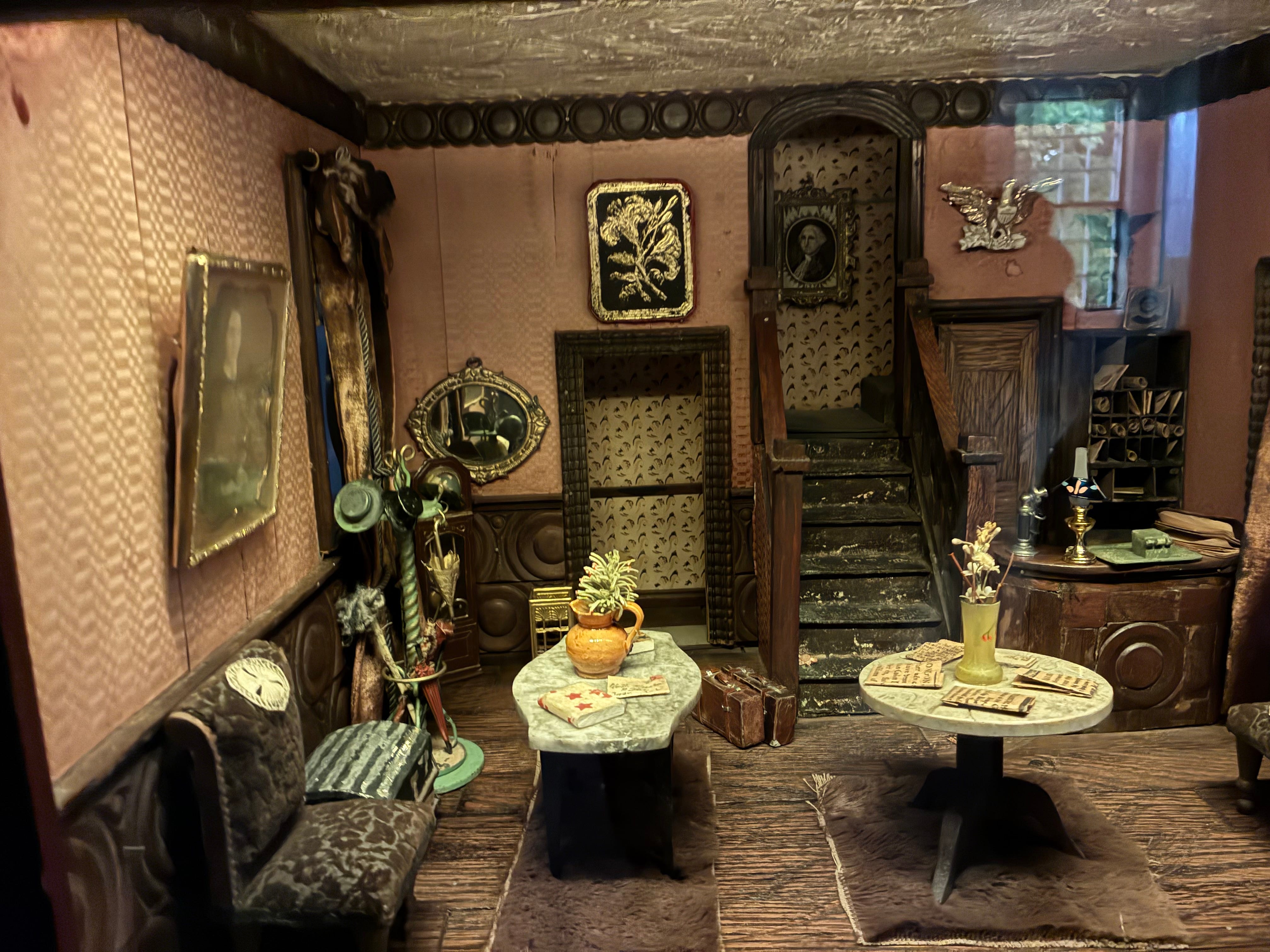
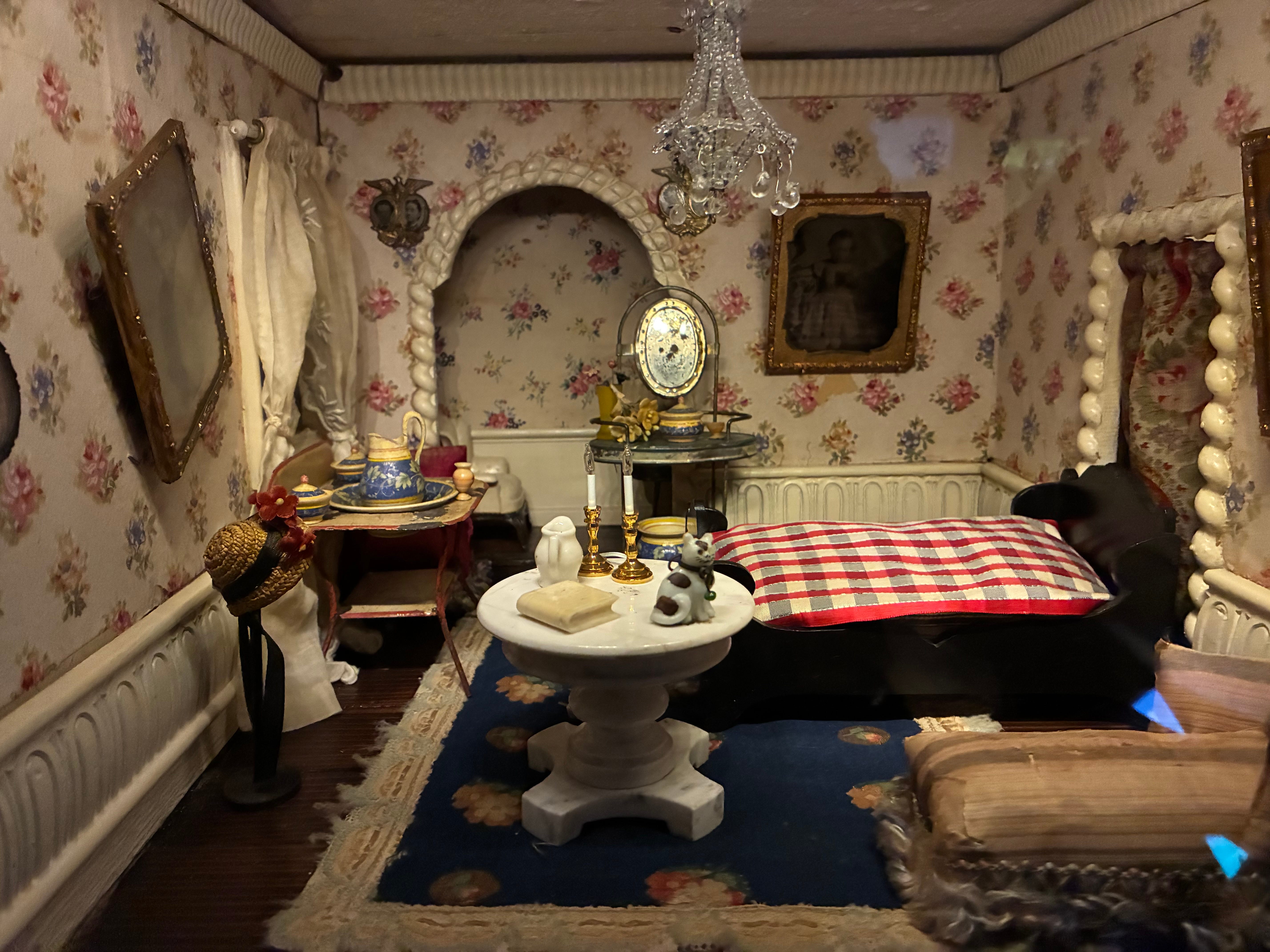
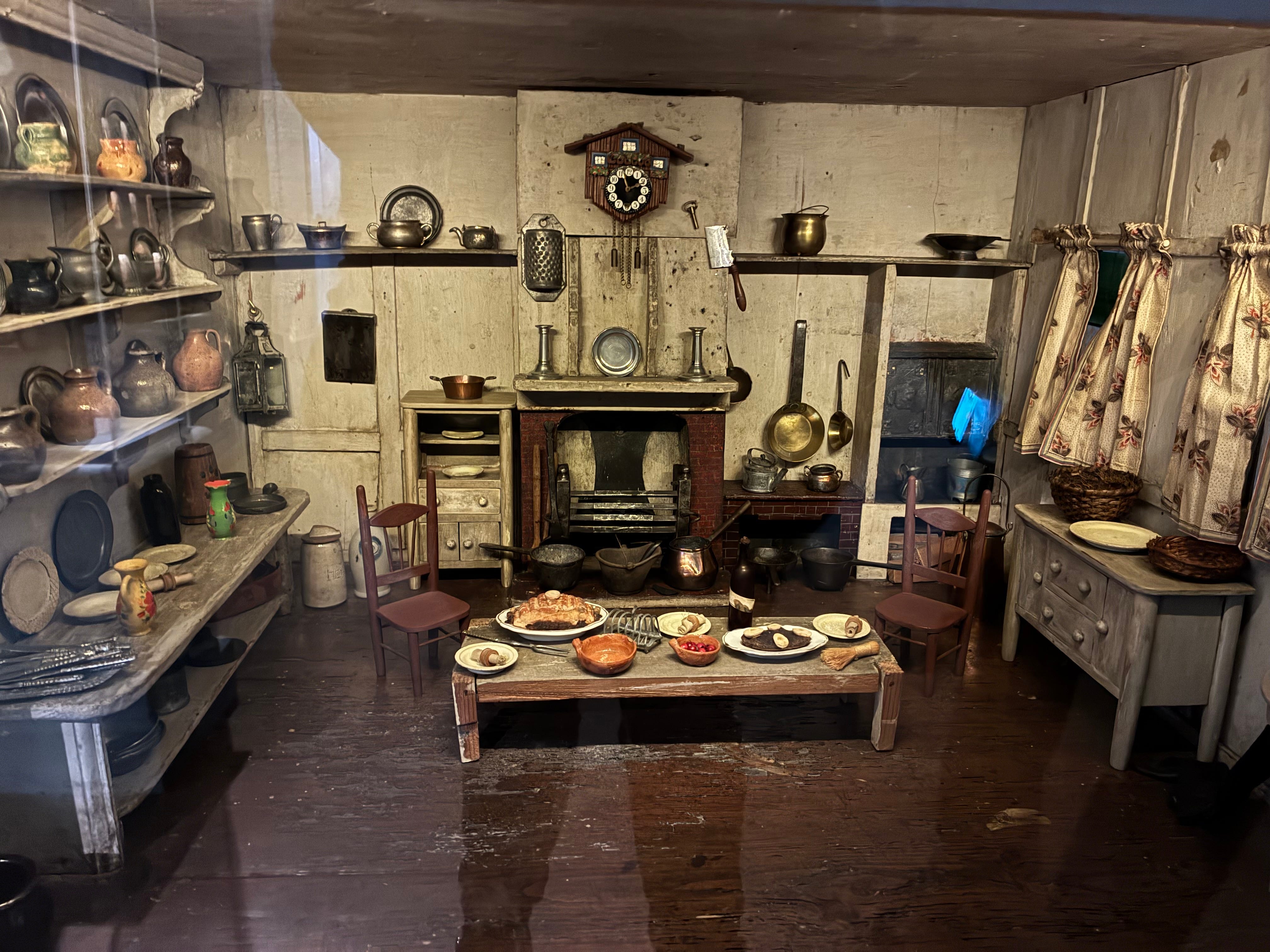
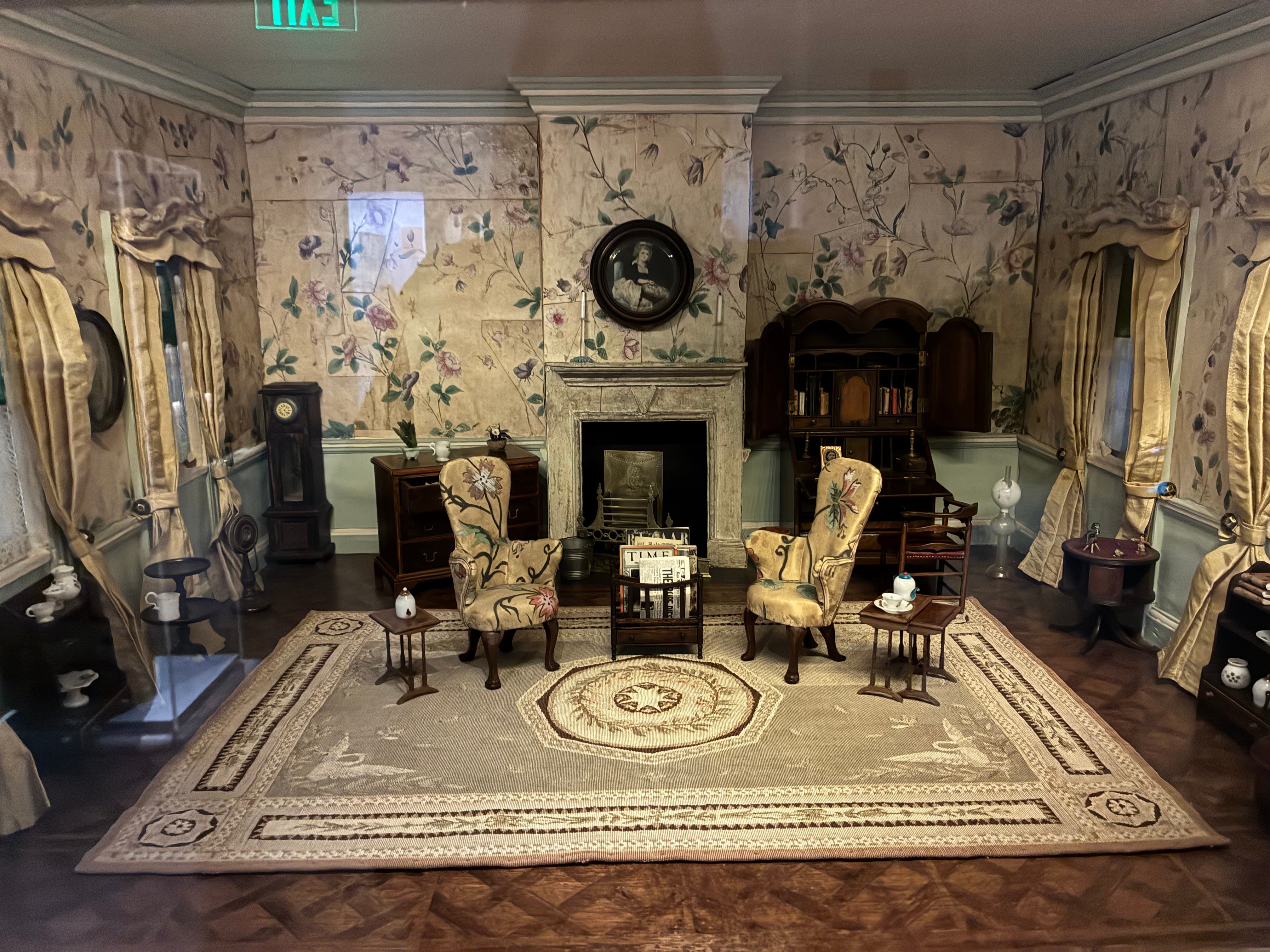
With Josh, I also saw the labor of Helen Bruce — a woman in her sixties and seventies, hand-making thousands of tiny objects for a friend, using techniques she had to teach herself for each new material.
The work behind the beauty.
The Apothecary
Attached to the General Store is the Apothecary Shop, which the museum added in 1959 to recreate a late nineteenth-century druggist’s shop. It is enormous. I had not been prepared for how enormous. The shelves run floor to ceiling along every wall, packed with hundreds of bottles, tins, boxes, and jars — every kind of over-the-counter remedy, herbal preparation, patent medicine, folk cure, and dubious tonic that Americans had access to between roughly the Civil War and the passage of the Pure Food and Drug Act in 1906.
Brightly labeled cure-alls. Bitters. Liniments. Pill presses. Mortar and pestle sets. The blue and red glass vessels in the front windows — symbols of the apothecary trade, with the red representing arterial blood and the blue representing venous — were the giveaway that this was a serious recreation.
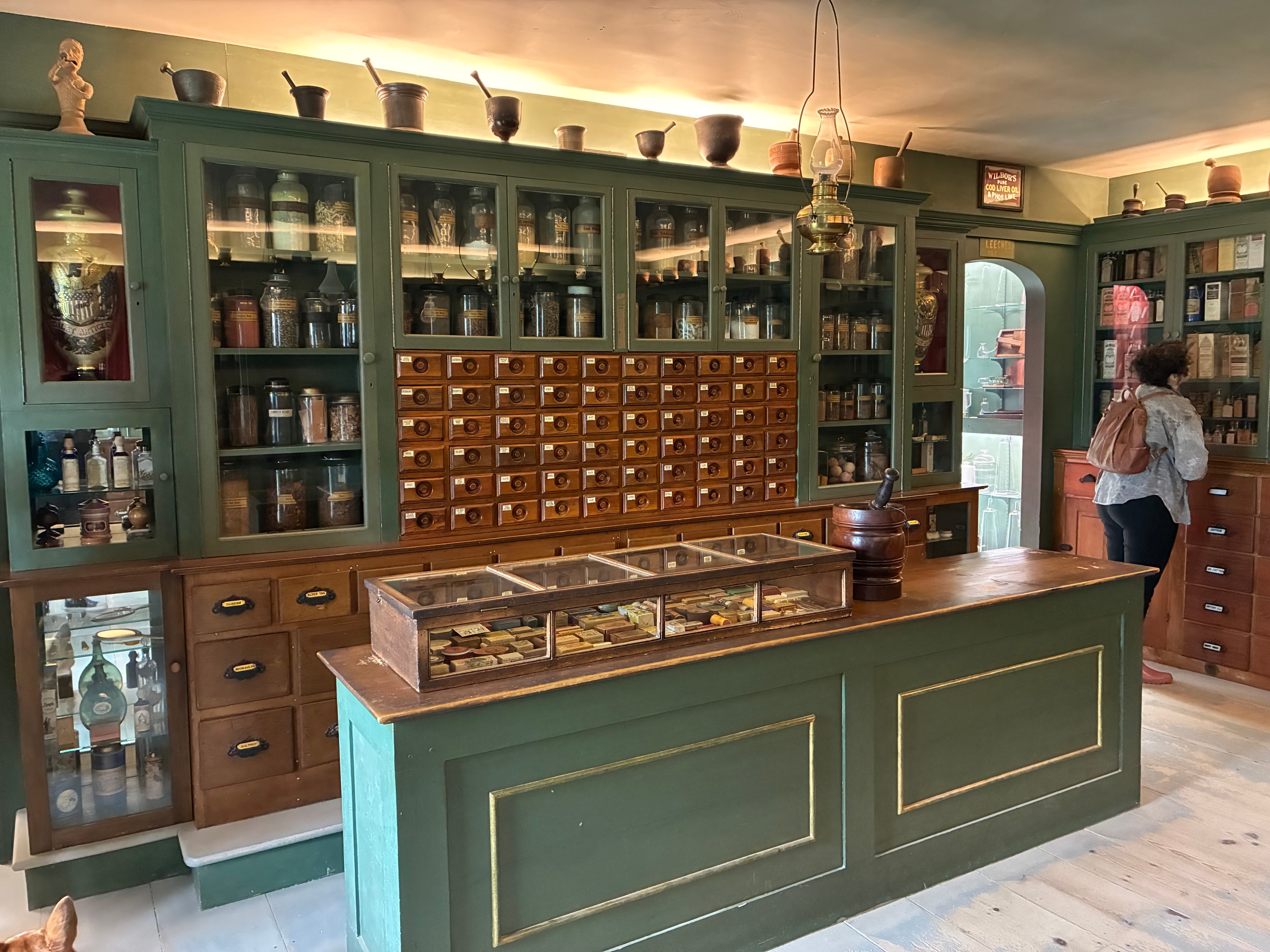
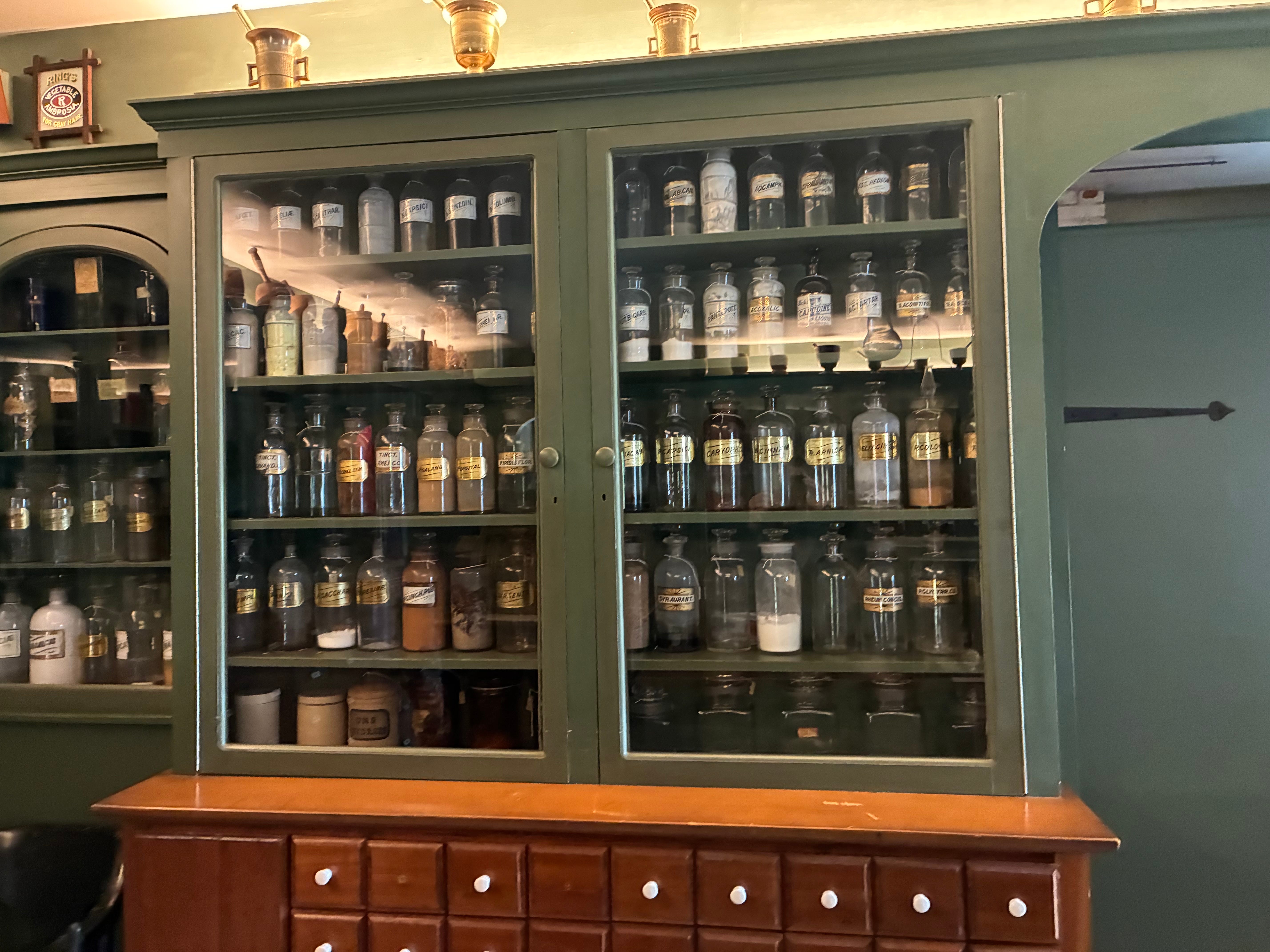
What surprised me — and shouldn’t have, at this point — was how much of it Josh knew. He recognized the active ingredients in half the patent medicines on the shelves, knew which ones were essentially just alcohol, which ones were essentially just morphine or cocaine, and which ones had a folk-medicine basis that turned out to be pharmacologically real.
He pointed out specific tonics that had been marketed for women’s complaints and explained what was actually in them. He could read the era of a bottle by its shape and the typography of its label.
And then he looked up at the ceiling and started explaining the light fixtures — the kind of electric conversion you’d find in a turn-of-the-century shop, how the original jets had been retrofitted with bulbs once electricity reached the village, how you could tell from the bracket design which decade the conversion had probably happened in, and why it’s a sin against morality and common sense to ever electrify a kerosene lamp.
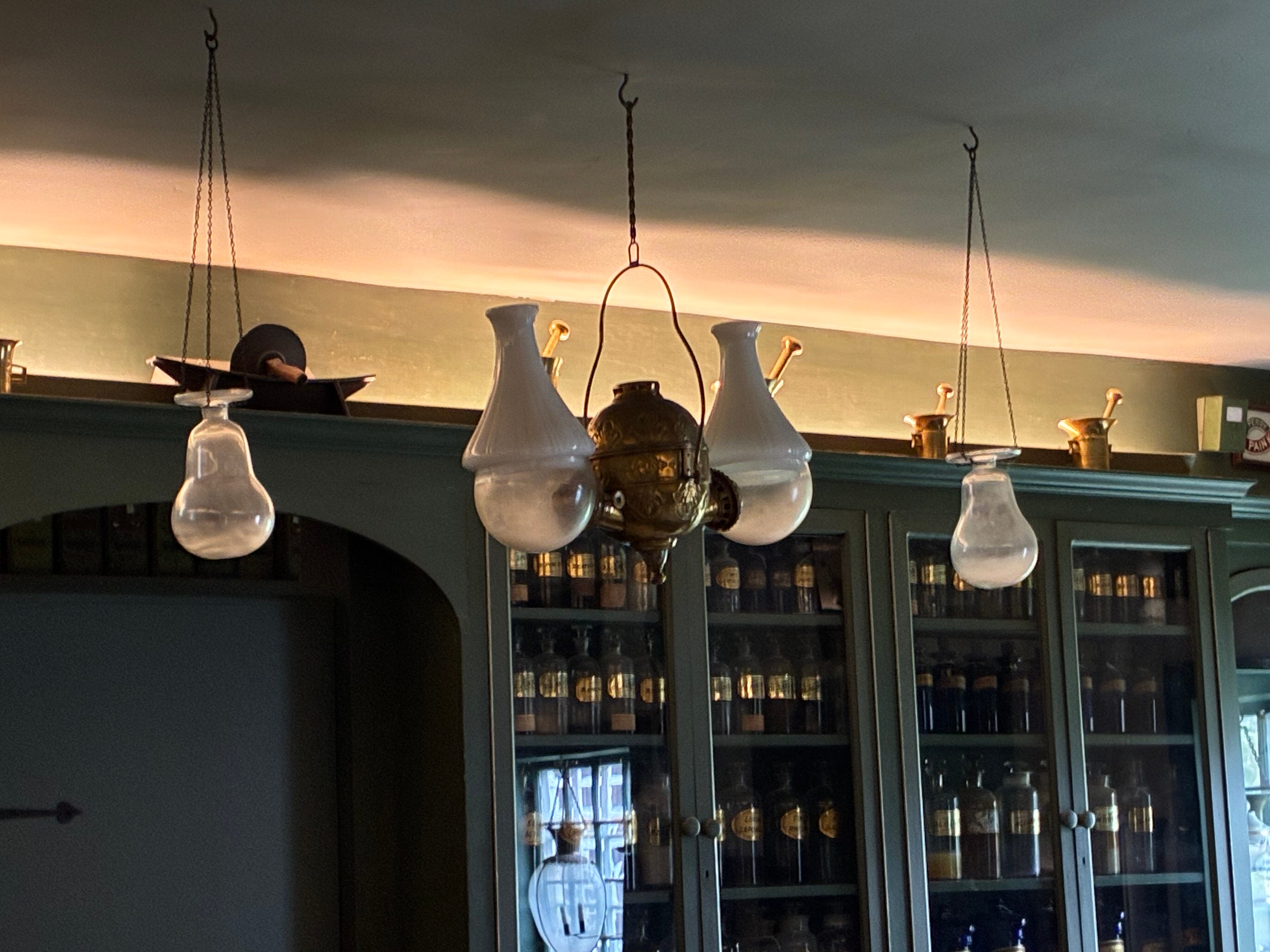
But what I will actually remember about the apothecary is what was on those shelves: what people took, what they trusted, what they had to make do with, and what it told us about how hard ordinary life used to be before any of us had the luxury of complaining about a CVS being out of our preferred brand.
The Ticonderoga
But oh, my God, the steamboat. The steamboat is the thing.
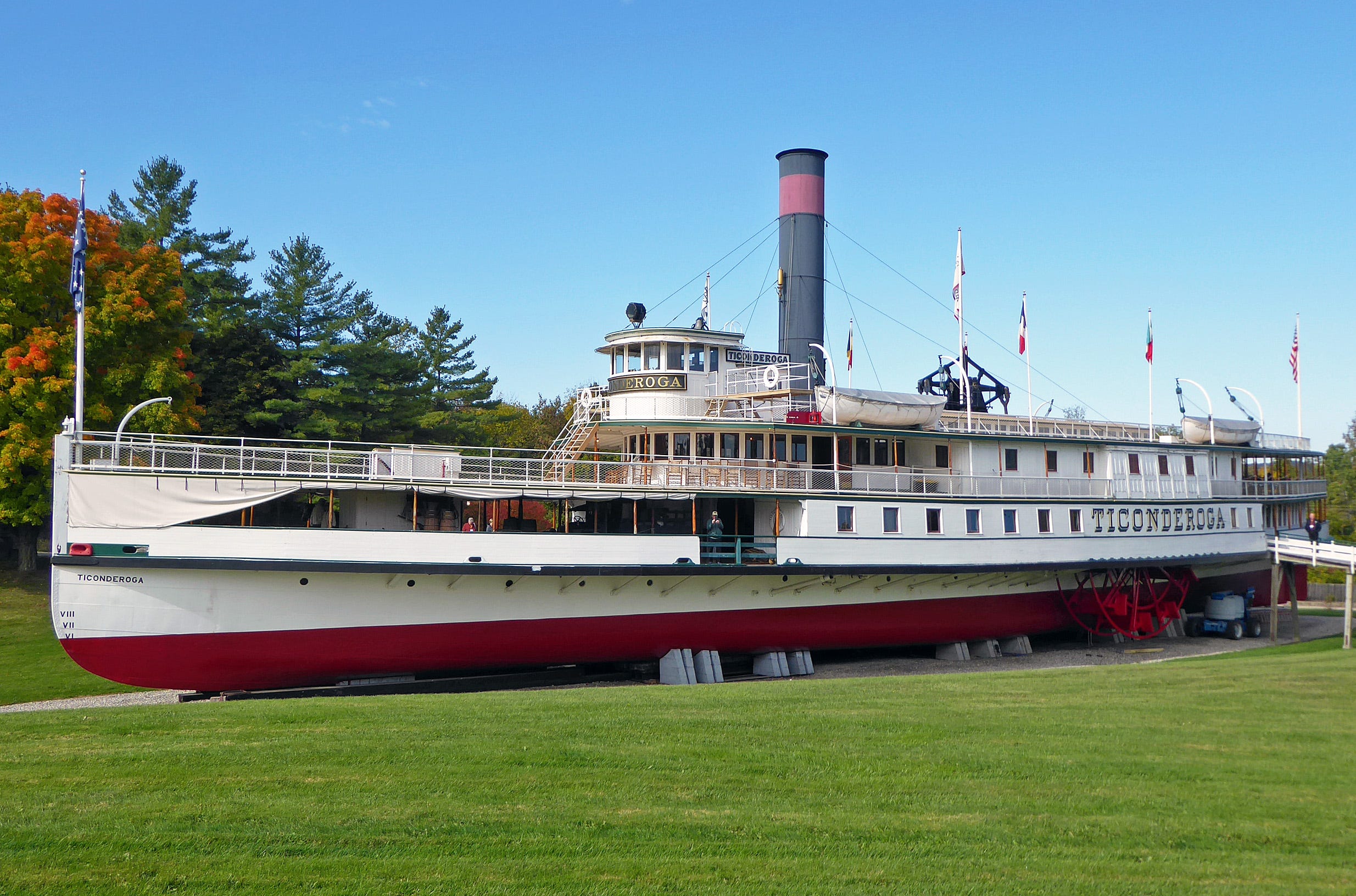
The Ticonderoga — known affectionately as “the Ti” — was built in 1906 at the Shelburne Shipyard for the Champlain Transportation Company. She is 220 feet long, weighs 892 tons, and is one of only two surviving side-paddle-wheel passenger steamers with a vertical beam engine left in the United States. The other one is the Eureka in California. The Ti is generally considered the only extant unmodified vessel of her type in the country. She is a National Historic Landmark.
She operated as a day boat on Lake Champlain — passengers, freight, troops during both world wars — until 1953, when she was retired. The conventional fate for a steamboat at the end of her working life is the scrap heap. The historian Ralph Nading Hill convinced Electra to buy her instead.
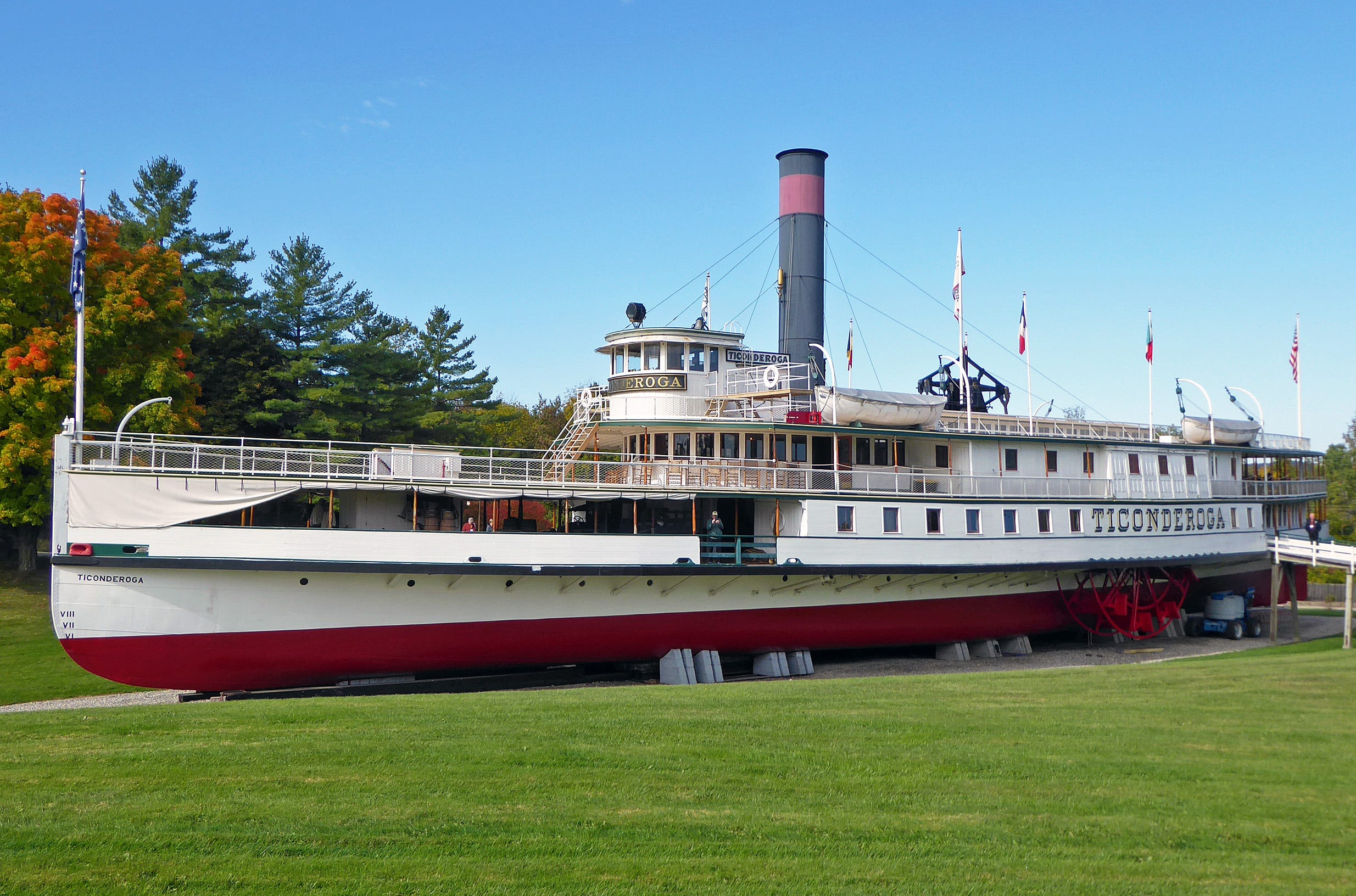
In 1955, the museum moved her two miles overland from Shelburne Bay to the museum grounds.
Two. Miles. Overland.
The way they did it is one of the great feats of maritime preservation. At the end of the summer season the boat paddled into a newly dug, water-filled basin off Shelburne Bay and floated over a railroad carriage resting on specially laid tracks. The water was then pumped out of the basin, and the Ticonderoga settled onto the carriage.
Then, over the winter, she was hauled across highways, over a swamp, through woods and fields, and across the tracks of the Rutland Railway to reach her permanent mooring at the museum. The whole move took sixty-two days.
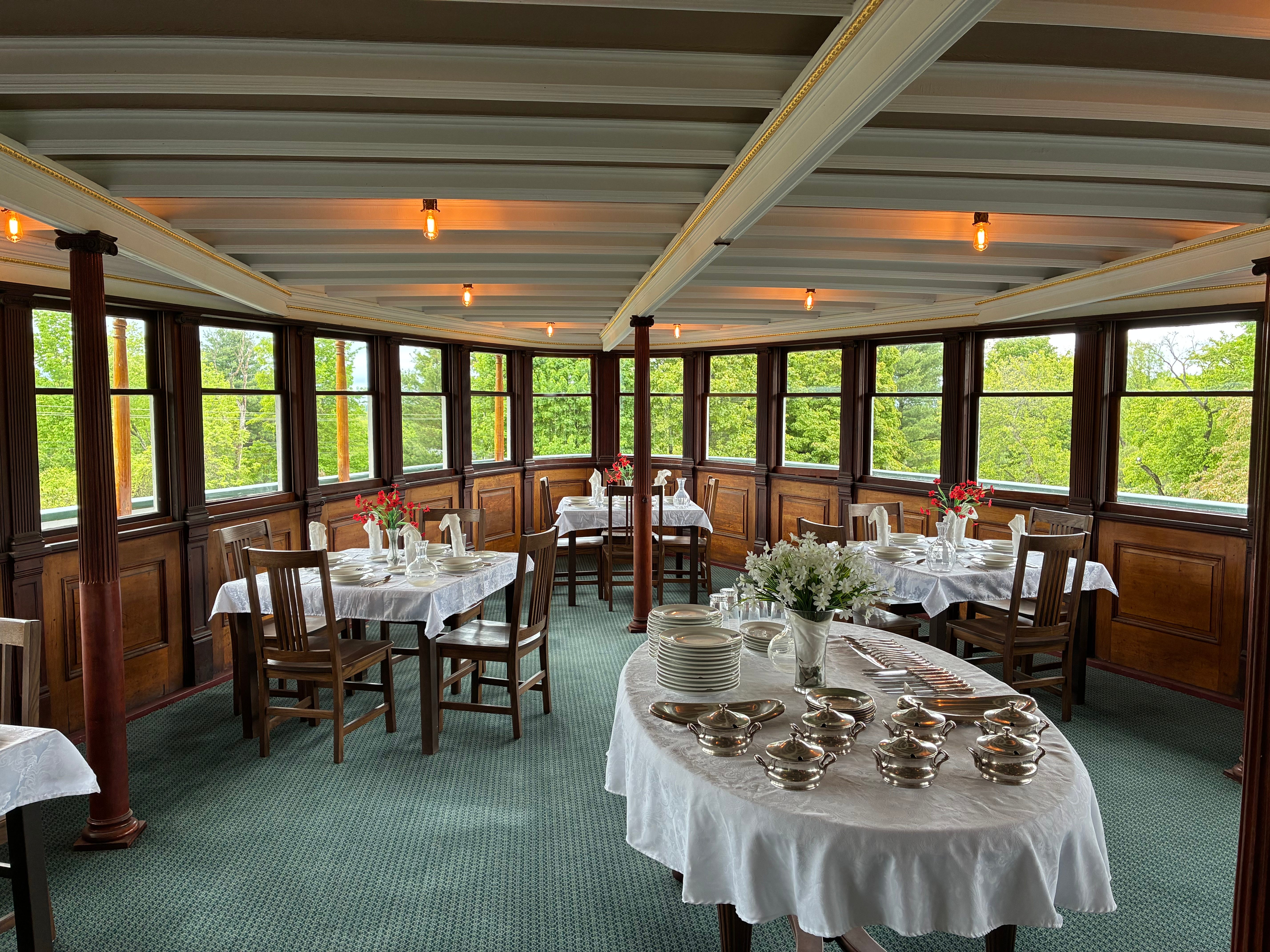
You can walk all four decks of her. Pilot house. Massive engine. Galley. Crew’s quarters. Staterooms. Grand staircase. Dining room with its butternut and cherry paneling, ceilings gold-stenciled. She is restored to portray life on board in 1923.
This is where Josh was indispensable, because I do not naturally understand steam.
I would not have understood the boat.
Josh understands the boat.
He stood in front of the vertical beam engine and explained what a walking-beam engine actually does — how the piston moves up and down, how the beam translates that motion into the rotation of the paddle wheel, how the linkages have to be precisely tuned or the whole thing tears itself apart.
He explained why coal-fired boilers required a constant supply of men shoveling coal into them — at speed, in the heat, around the clock, in shifts — to maintain the pressure required to keep the engine turning.
Men did that work. Men stood in front of a furnace on a moving boat on Lake Champlain in summer heat and shoveled coal into it, hour after hour, for the privilege of moving freight and passengers from Plattsburgh to Burlington at fourteen knots.
Men broke their bodies and called it a living. We owe them unpayable debts.
And then up in the pilot house, Josh did something I would not have known to be impressed by. He started explaining what celestial navigation had required on Lake Champlain in the early twentieth century — not deep-water navigation, but lake navigation, which has its own challenges.
The mental arithmetic involved.
The trigonometry of getting the boat where it needed to go using compass, charts, landmarks, and depth soundings. The fact that any competent pilot was, in addition to being a steamboat pilot, also a working mathematician, doing problems in his head, at speed, while operating a 220-foot boat in changing weather.
I think about this often, in the abstract, because of my background. The people who built and ran the Ticonderoga were doing real math, on the job, every day, with no calculator, no GPS, no AI, and no margin for error. They were not necessarily formally educated. Many of them, statistically, would not have finished high school.
But they were mathematicians, in exactly the working sense I am, and in the sense I am trying to build into the kid I tutor — fluent enough that the math disappears into the work, and the work is what shows.
That is the kind of thing I would have walked past if I’d been alone. I would have admired the polished brass on the engine telegraph and thought it would make a nice still life.
With Josh there, I admired the brass and also knew that the engineer answering that telegraph was running calculations in his head that most people with college degrees today could not do.
What It Was Like
By the end of the day my feet hurt and we hadn’t seen most of the museum. We didn’t make it into the needlework exhibition (On Point, Vermont schoolgirl samplers, opened May 9 — I will be going back). We didn’t get to the circus building. We didn’t get to the round barn or most of the carriages.
But the theme of the day held all the way through, and it was Mrs. Webb’s theme. Every object we looked at — Monet on a wall, an automaton clown walking on his hands, a cell of stacked slate, a miniature parlor by Helen Bruce, a vertical beam engine — was American in the sense that someone in this country had decided it was worth doing well.
Worth doing carefully.
Worth doing once, and doing right, in a way that would last.
Some of the Impressionists in the Memorial Building are stunning, and I am grateful Electra brought her parents’ collection home with her instead of selling it off.
But the deeper thing the museum is doing — the thing I think she meant when she said I try to find the art in folk art — is to insist that the boy in the jail, the woman who made the quilt, the engineer shoveling coal, the pilot doing trigonometry in his head, the volunteer who shaped the slate, and the dealer in her seventies hand-making miniature furniture for a friend, are all part of the same project.
They are all worth preserving. They are all worth standing in a building looking at, on a holiday afternoon, with a friend who can tell you how the mechanism works.
There is something I have come to believe about American culture over the last few years, which is that the people who built it were almost without exception better than the people who manage its reputation now.
That gap has widened, not narrowed. It is part of why I keep writing about it.
You could spend a full week at the Shelburne Museum and still not have made it through. I’m going to go back, many times, before I’m done. Some of it will be for Helen Bruce, some of it for the circus building, some of it for the round barn. Some of it, honestly, will be for the Monets.
But most of it will be for the rest of it — the trash, in Mrs. Havemeyer’s word — which is the part Electra built the museum to defend, and which, eighty years after she opened it, is still being defended one room at a time by docents and curators and conservators and visitors paying attention.
It is a remarkably American place.
It is American in the way I think America is at its best: built carefully, built to last, built by people whose names mostly aren’t on the walls, and preserved by a woman who refused to inherit her mother’s contempt for it.